


Reading Comprehension Disorder Treatment: What Works and How to Start
 Amanda Unrau
 M.A. CCC-SLP
05/12/26 | Last modified: 07/08/26
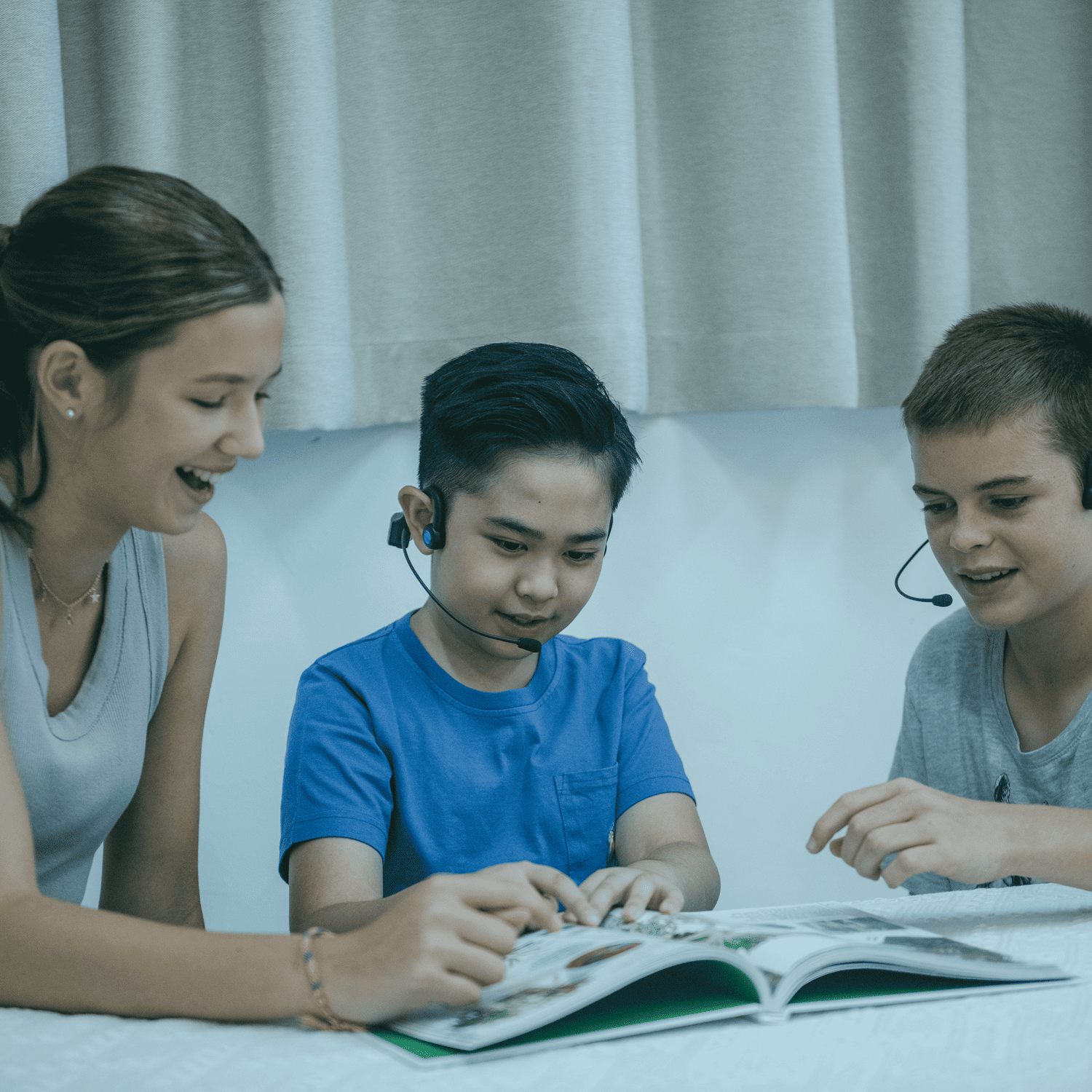
Your child has learned to read! What an accomplishment! However, the excitement of that milestone begins to fade as you realize that they don’t understand what they are reading, and they start to fall behind academically. As frustrating as this is for you and your child, there are many ways to support your child’s reading comprehension skills. This article will present various treatment and support options for weak reading comprehension skills. Please consult with a professional for a specific treatment plan and accommodations.
Understanding Reading Comprehension Disorder Treatment Approaches
Reading comprehension treatment involves learning story structure, understanding text genres, building vocabulary, and self-monitoring as you read. It is also important to address phonological awareness and word recognition, since decoding is a foundation of reading comprehension as well.
Reading comprehension challenges can also overlap with other reading difficulties, so identifying the specific source of the struggle is an important first step. If a child is unable to decode written material, they will be unable to understand it, since you can’t comprehend what you can’t read. Some children with reading comprehension difficulties may also experience challenges associated with dyslexia.
There are a variety of treatment approaches, and no single method works for everyone. Treatment is multi-dimensional, and some children may need to combine several methods in order to achieve success.
Core Reading Comprehension Disorder Treatment Methods
In this section, we will present the main categories of treatment available for children with a reading comprehension disorder. Review the components of each treatment type to determine which method is best for your child or student.
Educational Interventions
Children with reading comprehension disorders can receive support at school.
Teachers and reading specialists may employ a variety of intervention strategies, including explicit instruction, peer tutoring, reading aloud using active reading and monitoring, and enhancing vocabulary and background knowledge.
Children with a reading disorder may qualify for specialized services under an IEP (Individualized Education Plan).
Speech and Language Therapy
Many children with reading comprehension disorders benefit from targeted speech therapy.
Because comprehension is a component of receptive language and involves vocabulary, figurative language, and inference skills, reading comprehension is an area of speech therapy intervention.
A certified speech therapist can help children boost their language skills and learn strategies that they can utilize to increase their reading comprehension.
Cognitive and Behavioral Approaches
Children with poor reading comprehension skills often have higher levels of off-task thoughts and negative self-talk, which can lead to performance anxiety. It is important to address these social-emotional components of reading. Treatment of reading comprehension disorder should include self-acceptance, mindfulness, and constructive feedback. These approaches focus on helping children use a strategy and put in effort with perseverance. These techniques also offer reassurance to the child that they have the ability to achieve a task at their ability level. Consultation with parents should be included to give suggestions for cognitive techniques they can use at home that give feedback and motivate children to read.

Structured Literacy and Comprehension Strategies
Structured literacy and comprehension strategies include instruction-based approaches and skill-building techniques:
- An instruction-based approach is a method of teaching comprehension skills
- Skill-building techniques include specific skills that instruction should focus on
Instruction-Based Approaches
Explicit Comprehension Strategy Instruction
Your child’s teacher may use explicit instruction, which means that they will teach your child which strategies to use and when, why they should use strategies, and how to use them. Explicit comprehension instruction includes direct explanation, teacher modeling, guided practice, and application.
- Direct explanation: The teacher explains why a certain strategy aids comprehension and when to use it
- Teacher modeling: The teacher shows how to use the strategy by “thinking aloud” while reading
- Guided practice: The teacher offers guidance and assistance as students learn how, when, and why to apply a strategy
- Application: With the help of the teacher, students practice the strategy until they can confidently use it independently
Skill-Building Techniques
Build Awareness of Story Elements
Children need to develop an understanding of the elements of a story in order to comprehend what they read.
There are a variety of story elements that can be taught, and children can learn more complex elements as they advance. The main basic story elements typically include the character, setting, plot, conflict, and theme.
Teach Text Genres and Purposes
Text types or genres are different categories of texts that each have unique structures and characteristics.
The most common text types are narrative texts, descriptive texts, expository texts, procedural or instructional texts, and persuasive texts.
In order to better understand each type of text, children should learn the purpose and organization of each one.
Teach Text Structure
Text structure is the way that information in a text is organized. Understanding the text structure helps readers understand the author’s purpose, identify the key concepts, make predictions and inferences, and summarize the main idea.
The most common text structures children will come across are description, cause and effect, compare and contrast, chronology/sequence, and problem and solution.
Children should be shown examples of each text structure and taught signal words that are clues to the text structure used.
Teach Story Sequence
The sequence of a story is the order of events. Children should learn to identify the beginning, middle, and end of a narrative.
Sequencing leads to other skills as well, including problem solving and identifying cause and effect in more complex texts.
Putting steps in sequential order is a valuable skill across the curriculum.
Teach Retelling
Once a child is able to sequence the main events of a story, they can learn to retell stories.
In order to retell, children need to use their understanding of how stories work and apply that knowledge to each story they read. Retelling also includes summarizing and making inferences.
Boost Vocabulary Skills
One of the most essential comprehension strategies for struggling readers is building a robust vocabulary. This can be done in several ways.
Children should learn and be taught the specific unknown vocabulary words in each story they read.
It is also important to teach word learning strategies that promote increased independence. These include using a dictionary or thesaurus, using word parts (e.g., root words, prefixes, suffixes), and using context clues.
Comprehension Monitoring
Strong readers use metacognition to self-monitor as they read. Metacognition is when you think about thinking.
Students need to be able to think about and be in control of their reading. Children should be taught to be aware of what they do and do not understand, and use strategies to improve comprehension.
Examples of comprehension strategies include:
- Identifying what the difficulty is and where it occurs
- Restating the challenging section in their own words
- Looking back through the text
- Looking ahead in the text for clarifying information
Assistive Tools and Technology
Role of Technology in Learning Support
While not a primary treatment, technology can assist students with reading comprehension difficulties. Digital tools for children with a reading comprehension disorder include anything that helps a child who has difficulty understanding or gaining access to texts. Anyone who has listened to an audiobook has used assistive technology for reading. Technology is available to help students with various deficits. For example, a program that highlights words as they are read can help build vocabulary, and audiobooks with engaging voices can help students focus.
Digital Tools and Accessibility Supports
Graphic organizers help students organize story components while they read or assist in retelling. Examples of graphic organizers include story maps, Venn diagrams, storyboards, and cause-and-effect organizers. Annotation tools allow children to take notes or add comments while they read. Both of these have digital or no-tech options. Text-to-speech software and screen readers can also enhance reading comprehension. Many types of assistive technology include dictionaries and word prediction, which can help with vocabulary and language skills.
At-Home and Everyday Support
It is important to support formal reading comprehension treatment at home.
The best way parents can help build their child’s reading comprehension skills at home is to read with them every day.
- Read aloud to your child or have them read aloud with you
- Predict what will happen next and why
- Discuss and retell what happened in the story
- Point out pictures that offer clues
Daily exposure and practice will build your child’s confidence and comprehension.
When to Seek Professional Help
These reading comprehension disorder treatments follow a specific plan and should be individualized for each student. They are most effective when implemented by a licensed professional who is an expert in this area. If you notice any of the following, contact a professional and pursue an evaluation: ongoing difficulty understanding age-appropriate texts, difficulty retelling what they read, limited vocabulary, avoidance of reading at home or in school, or frustration around reading.
Having your child evaluated is a positive step. An evaluation and diagnosis will show specific areas of strength and weakness, and will help to guide treatment for your child. To pursue an evaluation, contact a pediatrician, school psychologist, reading specialist, or speech-language pathologist.
The Benefits of Using Forbrain to Help a Child with Reading Comprehension Disorder
Forbrain is a headset that uses bone conduction technology and an audio-vocal feedback loop. When children read aloud while wearing the headset, their voice is amplified, and they hear their own voice more clearly, which may help strengthen the connection between speaking, listening, and language processing.
For some children, this type of auditory feedback may support attention, listening, and retention during reading practice. However, Forbrain should be used as a supportive tool alongside structured instruction, therapy, and professional guidance.
Bottom Line
Children who struggle to comprehend what they read can improve with targeted support and teaching. Many reading comprehension disorder treatments are available. Review the treatment methods presented in this article to identify which ones may be a good fit for your child.
In order to select an appropriate reading comprehension treatment approach, you need to know the specific deficits your child has. It is important to pursue a reading assessment to start the process and to provide support at home.
With consistent targeted treatment and home practice using Forbrain, your child will be able to better retain and understand what they read.
References
Adler, C.R. (Accessed 2026, April 24). Seven Strategies to Teach Students Text Comprehension. Reading Rockets. https://www.readingrockets.org/topics/comprehension/articles/seven-strategies-teach-students-text-comprehension
ASHA. (Accessed 2026, April 23). Written Language Disorders: Intervention Target Areas. American Speech-Language-Hearing Association. https://www.asha.org/Practice-Portal/Clinical-Topics/Written-Language-Disorders/Intervention-Target-Areas/
Cummins, Kevin. (2021, July 23). Teaching the 5 Story Elements: A Complete Guide for Teachers and Students. Literacy Ideas. https://literacyideas.com/teaching-story-elements/
David, C., Costescu C., Frandeș A., Roșan A. (2024, Feb 28). Cognitive Regulation Strategies Used by Children with Reading Difficulties. Children (Basel), 11(3):288. doi: 10.3390/children11030288.
G., Felicia. (2025, September). Assistive Technology for Reading Difficulties: A Comprehensive Guide. Dyslexic Help. https://dyslexichelp.org/how-assistive-technology-can-be-used-to-help-students-with-reading-difficulties/
Reading Rockets. (Accessed 2026, April 23). Assistive Technology and Reading. Reading Rockets. https://www.readingrockets.org/topics/assistive-technology/articles/assistive-technology-reading
Reading Rockets. (Accessed 2026, April 24). Classroom Strategies: Story Sequence. Reading Rockets. https://www.readingrockets.org/classroom/classroom-strategies/story-sequence
Reading Rockets. (Accessed 2026, April 24). Background Knowledge: Strategies that Promote Comprehension. Reading Rockets. https://www.readingrockets.org/topics/background-knowledge/articles/strategies-promote-comprehension
Reading Rockets. (Accessed 2026, April 24). Teaching Text Structure. Reading Rockets. https://www.readingrockets.org/classroom/comprehension/teaching-text-structure
Reading Rockets. (Accessed 2026, April 24). Understanding Text Types. Reading Rockets. https://www.readingrockets.org/classroom/choosing-and-using-classroom-texts/understanding-text-types
Reading Rockets. (Accessed 2026, April 24). Vocabulary: In Practice. Reading Rockets. https://www.readingrockets.org/reading-101/reading-101-learning-modules/course-modules/vocabulary/practice