


Can You Learn to Sing If You Have a Bad Voice? A Vocal Coach’s Honest Answer
 Lara Ziff
 Vocal coach, Vocalist
02/26/26 | Last modified: 02/26/26
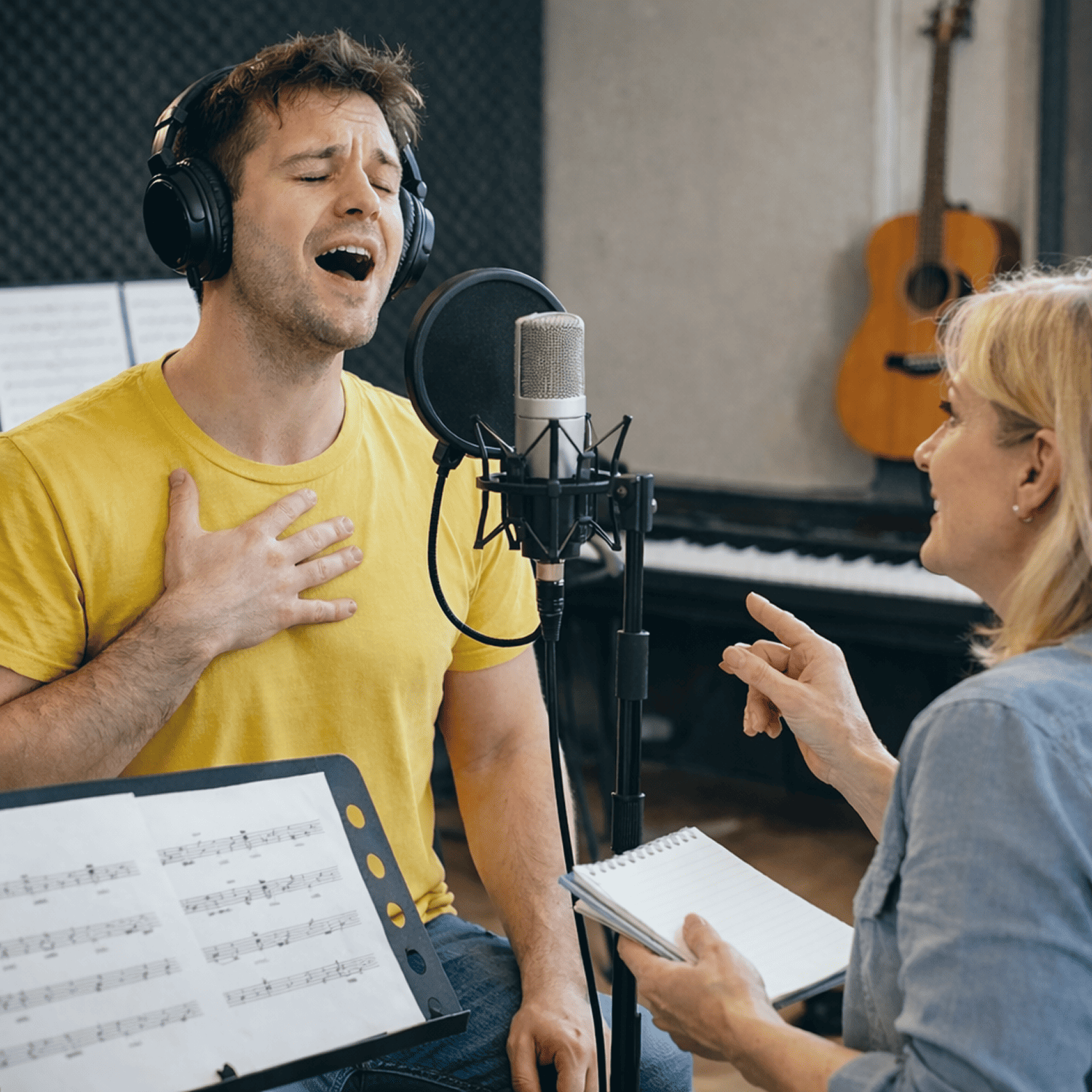
Many people quietly carry the belief that they simply weren’t meant to sing. Maybe you felt embarrassed during karaoke one time, or maybe you recorded your voice once and immediately thought, “That’s terrible.”
As a vocal coach, I want to reassure you right away – most people who think they have a bad voice do not actually have a bad voice. They have an untrained voice, which is a very different thing. A voice is not a fixed trait. It’s a system involving breath, muscles, coordination, and hearing. Systems can be trained. Coordination can improve and hearing can become more accurate.
So if you’re hoping for an honest answer, here it is. In most cases, yes, you can learn to sing – you may even be far more capable than you believe.
Can You Learn to Sing If You Have a Bad Voice, or Is It Permanent?
When people ask me this, they usually assume something about their voice is permanently flawed. They think everyone else was born with something they missed out on. But in reality, when someone says they have a bad voice, they usually mean they sing off pitch, they struggle with breath control, or they feel awkward and tense.
None of those things are permanent traits. They are signs of inexperience and lack of coordination. Singing is a physical skill. It involves muscles that can strengthen and patterns that can become more refined over time.
If you’re wondering, “Can a bad singer become good?” the more useful question is whether someone without training can become trained. And of course they can, that is how every skilled singer began.
What People Really Mean by “Bad Voice”
When you describe your voice as bad, you are usually describing frustration, not a permanent condition. You might try to match a melody and consistently land slightly above or below the note. That can feel discouraging very quickly. But pitch accuracy is something that improves with practice and ear training.
You might also feel physical strain when you sing. Your throat tightens, and high notes feel impossible. The sound feels forced instead of free. Often this happens because you are pushing too hard or misunderstanding how breath support works. Tension builds, and the sound suffers.
Sometimes the issue is simply control. A note starts steady but wobbles. You run out of breath halfway through a phrase. That does not mean your voice is bad, it means the coordination between breath and vocal folds is still developing.
It’s important not to confuse identity with skill. Saying “I am bad” makes improvement feel impossible. Saying “I haven’t trained this yet” leaves room for growth.
Is Singing Talent or a Learnable Skill?
Many people believe singing is something you are either born with or not. That belief stops people before they even try. Singing is most definitely a learnable skill. Some people grow up in musical environments and start building coordination early. That early exposure can look like natural talent. But what you are often seeing is years of repetition and feedback.
Your brain already controls your voice in complex ways. You adjust pitch when you speak, you change tone depending on emotion, and you even vary volume without thinking. Singing uses those same systems, but just in a more refined way.
With consistent practice and clear feedback, your brain strengthens the connection between what you hear and what you produce. Over time, pitch becomes more accurate, tone becomes steadier, and breathing becomes more efficient.
The next time you question, “If you can’t sing can you learn?”, remember that you already use your voice skilfully every day. Singing just simply requires training that system more precisely.
Why So Many Beginners Struggle
When you’re starting out with singing, impatience and frustration can take over early on. A main reason why most beginners struggle is because they don’t hear themselves accurately. When you sing, you hear your voice in two ways. You hear it through the air, just like others do. But you also hear it internally through bone vibration. That internal sound makes your voice seem fuller and often lower than it truly is.
This can distort your sense of pitch. You may think you are on the note when you are slightly flat or sharp. When you hear a recording, the difference can feel shocking and discouraging.
Almost everyone dislikes hearing their recorded voice at first. That discomfort is not proof that you cannot sing. It simply means your brain is adjusting to more accurate feedback. Learning to sing requires learning to trust clearer information about your sound.
The Role of Auditory Feedback in Singing
Singing can depend heavily on auditory feedback. Your brain constantly listens to what you are producing. When you aim for a note, your brain compares what it hears to the target pitch. If it is off, it sends signals to adjust the muscles that control sound.
These adjustments happen quickly, but they rely on accurate information. If the information is distorted, improvement is slower. That is why recording yourself can help, it provides a more objective reference point. Structured exercises also help because they give your brain consistent targets.
Some singers choose to use tools that enhance how they hear their own voice during practice. Clearer perception can support pitch stability and control, especially in the early stages. If you are building your fundamentals, you might explore practical techniques in this guide, which focuses on developing stronger coordination step by step.
When your brain receives better input, it can produce better output.
How to Improve a “Bad” Voice
If you find yourself researching “how to sing with a bad voice”, the answer is not dramatic or impossible. It is realistic and practical.
Consistent practice is one of the most powerful tools you have. You do not need to sing for hours every day. In fact, shorter, focused sessions are often more effective. Fifteen minutes several times a week builds coordination far better than one long session occasionally. Repetition strengthens patterns in the brain and body.
Working within a comfortable range is also important. Many beginners choose songs that sit far beyond their range which creates strain and frustration. When you stay in a range that feels manageable, you build stability first. Over time, your range expands naturally as coordination improves.
Reducing physical tension makes a noticeable difference as well. Tight shoulders, a clenched jaw, or a raised chin can all interfere with sound. Before singing, you must ensure that your posture is steady. It is always best to stand, as this allows your diaphragm to move freely and reduces unnecessary tension. Your feet should be shoulder width apart, and your hands are best by your side. It’s also important to consider your mouth muscles by softening your jaw and keeping your tongue relaxed. A calmer body supports a freer voice.
Improving how you hear yourself is equally important. If pitch feels confusing, clearer feedback can speed up learning. Recording yourself regularly or using tools that enhance auditory feedback can help your brain make faster, more accurate adjustments.
How Long Does Improvement Take?
Everyone is different, and there is no right or wrong answer in terms of how long it can take someone to improve. If you’re wondering whether a bad singer can become good quickly, it helps to set realistic expectations.
In the first few weeks of consistent practice, you may notice increased awareness. You start recognizing when you drift off pitch for example, or you may become more conscious of tension. After a few months, control often becomes steadier, notes feel more stable, breathing feels more focused, and the strain decreases.
Confidence often develops more slowly than skill. Your voice may improve before your self-belief does and that is normal. Improvement is gradual and it builds layer by layer. However, steady work produces consistent change.
Common Myths That Hold You Back
Many people stop/restrict themselves because of limiting beliefs. Some believe they are tone deaf. In reality, true tone deafness is rare. Most pitch problems come from lack of training, not a permanent inability.
Others believe adults cannot learn to sing. In fact, adults often improve efficiently because they practice with intention and focus. Your brain remains capable of building new patterns throughout your life.
Some cling tightly to the idea that their voice is just naturally terrible. But most so-called ‘bad’ voices are just dealing with tension, lack of coordination, or unclear feedback. These factors can change.
And finally, many assume that if improvement is not immediate, it will never happen. Singing rarely develops in a straight line. Progress can feel slow, then suddenly something clicks. Patience matters more than speed!
How Forbrain Can Help You to Sing
Because singing relies so much on auditory feedback, improving how you hear your voice can support progress. Forbrain uses bone conduction to transmit your voice back to you while you speak or sing. This can make your voice feel clearer and more defined to your brain. For some singers, this enhanced perception supports stronger pitch awareness and better vocal control during practice.
It is not a replacement for technique or consistent training. But when combined with regular practice, clearer feedback can make learning feel more connected and less frustrating.
Can You Learn to Sing If You Have a Bad Voice?
Tracing back to the original question – the official answer is, the majority of the time, yes. You can learn to sing even if you have a bad voice. However, this is grounded in training, dedication, focus, and consistency, not talent. If you’ve asked, “Can a bad singer become good?” many already have. They simply stayed patient long enough to improve.
Most voices that sound bad are untrained, tense, or lacking accurate feedback. With consistent practice, reduced tension, and clearer auditory awareness, your voice can become steadier and more confident. You do not need perfection; you just need patience.
Your voice is not something to be fixed, it is adaptable. If you are willing to work with it instead of against it, you may discover that what you once called a bad voice was simply only the beginning.
