


Best Vocal Steamer for Singers (2026 Expert Guide)
 Tyler Connaghan
 Music producer, Singer
03/02/26 | Last modified: 06/10/26
If you sing regularly, you’ve definitely experienced the dreaded feeling of a dry throat before rehearsal or irritation halfway through a long session. Even worse when you start to get that subtle hint of “oh no, I’m gonna blow my voice out” an hour before a big show. Staying hydrated is part of the job as a singer, and that’s why vocal steaming has become so popular.
But still, there are many skeptical singers out there. Does steaming actually help? Is a facial sauna the same thing as a steam inhaler for singers? And are all these products marketed toward vocalists actually designed with singers in mind?
Well, yes and no.
But that’s why I put together this guide of the best vocal steamers for singers. The goal is to answer those questions and explore different devices that offer a hydration helping hand. To put this guide together, I evaluated each device using hands-on testing, manufacturer specifications, feedback from working singers, and commentary from voice professionals.
Up next, I’ll break down exactly how I evaluated each product so you can see how the comparisons were made before we get into the meat and potatoes.
How We Evaluated the Best Vocal Steamers for Singers
Before recommending any product as the best vocal steamer for singers, I wanted to make sure I had a framework that aligns with how singers would use these devices rather than how they’re marketed.
Every steamer in this guide was evaluated using the exact same criteria. I didn’t want to give any brand special treatment. Here’s what I looked at:
Steam Delivery Type
First off, not all “steamers” work the same way.
Some produce true warm steam, while others create a nebulized saline mist. Both feel different and serve slightly different purposes. I also looked at:
- Whether the steam output is continuous or intermittent
- How quickly it reaches full output
- Particle size (when published), especially for nebulized devices (smaller particles are able to travel further into the respiratory tract)
Safety and Build Quality
You’re literally inhaling what these devices produce, so it’s important to consider build quality.
I evaluated:
- Temperature regulation and burn protection
- Auto shutoff features
- FDA clearance (when applicable)
- Materials used (BPA-free plastics, medical-grade components)
If a device felt cheaply constructed or overly hot, it didn’t score well.
Portability & Ease of Use
Singers don’t just steam at home. Many steam backstage, in dressing rooms, or while traveling.
I looked at:
- Plug-in vs. handheld design
- Setup time
- Cleaning requirements
- Travel friendliness
If something takes 15 minutes to assemble and sanitize, it’s not the most practical for working performers who need a last-minute steam before curtain call.
Performance for Singers
This is where I tried to dig deep.
I evaluated:
- Ideal session length
- Consistency of output over time
- Noise level (very important backstage)
- Whether it’s actually usable in performance environments
Some devices are fine for home use but impractical in live settings.
Pricing & Long-Term Value
Just because something is more expensive doesn’t necessarily mean it’s better. That’s why I compared:
- Upfront cost
- Durability
- Availability of replacement parts
- Ongoing costs (saline pods, filters, etc.)
The goal was value relative to real-world use.
Online Reviews & Reputation
And finally, I brought it together with the thoughts of the people. Specs tell one story. Real users tell another. This included:
- Verified buyer feedback
- Sentiment from singers and vocal communities
- Voice coach recommendations
- Recurring complaints or durability issues
I also made a point to try and look for patterns in reviews rathers than isolated reviews.
Research Transparency
Every tool in this guide was evaluated using this same framework to keep comparisons consistent and fair.
Sources included:
- Official manufacturer specs
- Retail product listings
- Verified customer reviews
- Expert commentary from voice professionals and vocal health educators
No products were sponsored or paid placements in this ranking.
And most importantly: I think it’s important to talk about caution with any devices like these. Vocal steaming may support hydration and comfort, but it is not a medical treatment and should not be viewed as a cure for vocal injury.
Now, let’s compare these devices side by side.

Best Vocal Steamers Compared (Quick Overview)
| Product | Type | Steam Output | Portability | Price |
| VocalMist Portable Nebulizer | Saline Nebulizer | Cool nebulized saline mist | Excellent (rechargeable, handheld) | $138.00 |
| MyPurMist 2 Handheld Steam Inhaler | Warm Steam Inhaler | Ultrapure warm steam | Moderate (Plug-in required) | $139.90 |
| Conair Facial Sauna (MDF6) | Facial Steam Sauna | Warm steam (consumer-grade) | Low (Large footprint, plug-in) | $34.99 |
| Vicks Personal Steam Inhaler | Warm Steam Inhaler | Warm steam (basic consistency) | Moderate (Plug-in) | $59.99 |
VocalMist — Best Portable Nebulized Option for Singers
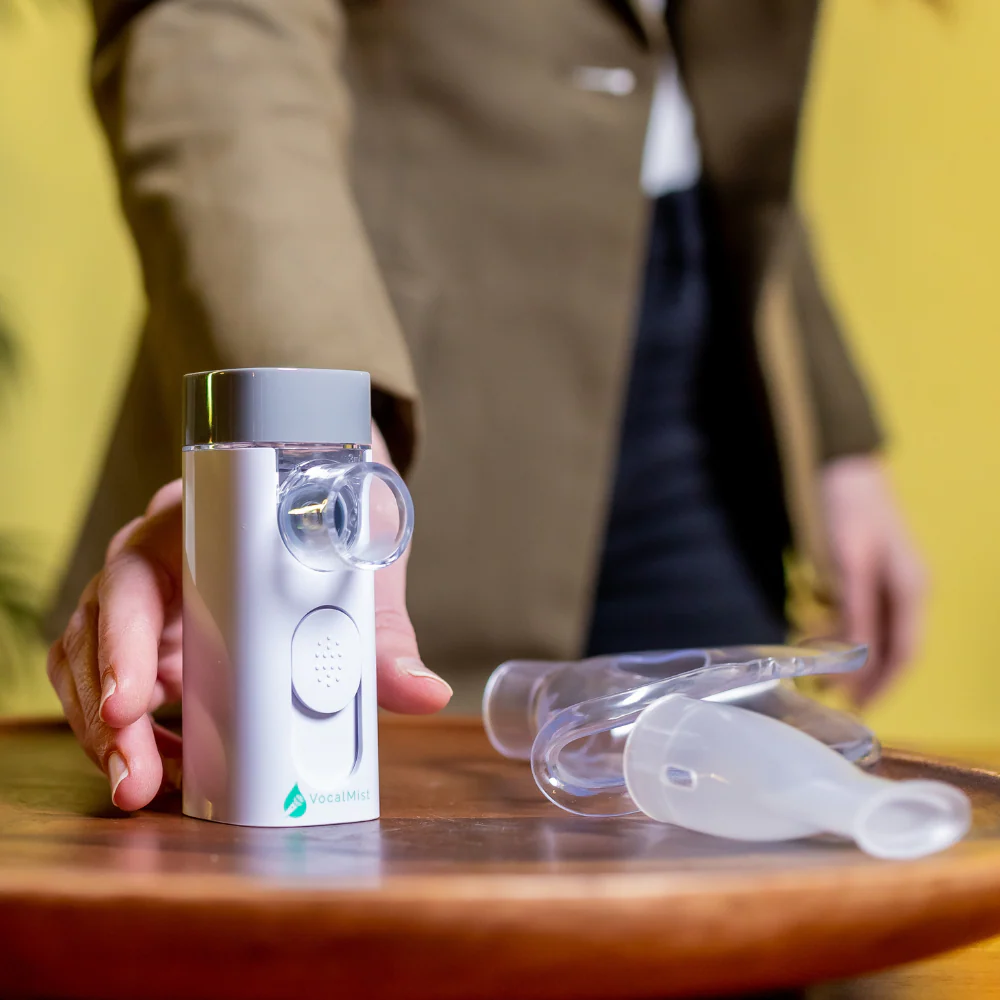
As someone who’s spent an inordinate amount of time in Broadway green rooms, I can tell you confidently that VocalMist is a go-to choice for many pro singers. It’s not a traditional steam inhaler, but a portable saline nebulizer. Instead of producing hot steam, it delivers a fine mist of sterile saline directly to the airway, which many performers prefer.
Specs
- Type: Portable ultrasonic nebulizer
- Output: Fine saline mist (not heated steam)
- Power: Rechargeable battery
- Operation: Handheld, mouthpiece-based delivery
- Accessories: Disposable saline ampules
Steam Delivery Type
VocalMist does not produce warm steam. It creates a cool, medical-style nebulized saline mist.
That means:
- No heat involved
- Smaller mist particles
- Direct inhalation through a mouthpiece
Some singers prefer traditional warm steam for the soothing sensation. Others like nebulized saline because it’s controlled, consistent, and easier to use backstage without heat or condensation.
Safety & Build
Because it uses sterile saline and produces no heat, there’s minimal risk of burns, which is a plus compared to traditional steam devices. The unit itself feels sturdy, and it’s designed for repeated travel use.
As with any nebulizer, it’s important to stick to a proper cleaning routine and only use manufacturer-approved saline ampules.
Performance for Singers
In practice, VocalMist is quick and practical. A typical session lasts around 5 to 10 minutes. It’s quiet enough to use backstage and doesn’t require boiling water or setup time.
If you’re performing nightly, it’s incredibly convenient.
Portability & Ease of Use
This is what makes VocalMist so popular.
- Fully portable
- Rechargeable
- Compact enough for a gig bag
- No need for an outlet
Compared to plug-in steam inhalers, it’s much more travel-friendly. That’s one of the main reasons you see it in touring setups.
Pricing
Online Reviews & Reputation
VocalMist has built a strong reputation with professional singers, especially in theatre and touring circles. Many users praise its portability and reliability. The most common positive feedback centers around how easy it is to use backstage.
The only real negative feedback is the ongoing cost of saline pods.
Overall, the sentiment is pretty positive in the performing community.
Pros & Cons
| Pros | Cons |
| Extremely portable and travel-friendly | Not true warm steam |
| No burn risk (cool saline mist) | Ongoing cost of saline ampules |
| Quiet enough for backstage use | Higher upfront price than basic steamers |
| Popular with touring and Broadway singers | Requires regular cleaning and maintenance |
If portability is a top priority and you want a practical, no-heat option, VocalMist is one of the most common choices among working singers. Up next, we’ll look at a more traditional warm steam option and how it compares.
MyPurMist 2 — Best Professional Warm Steam Inhaler
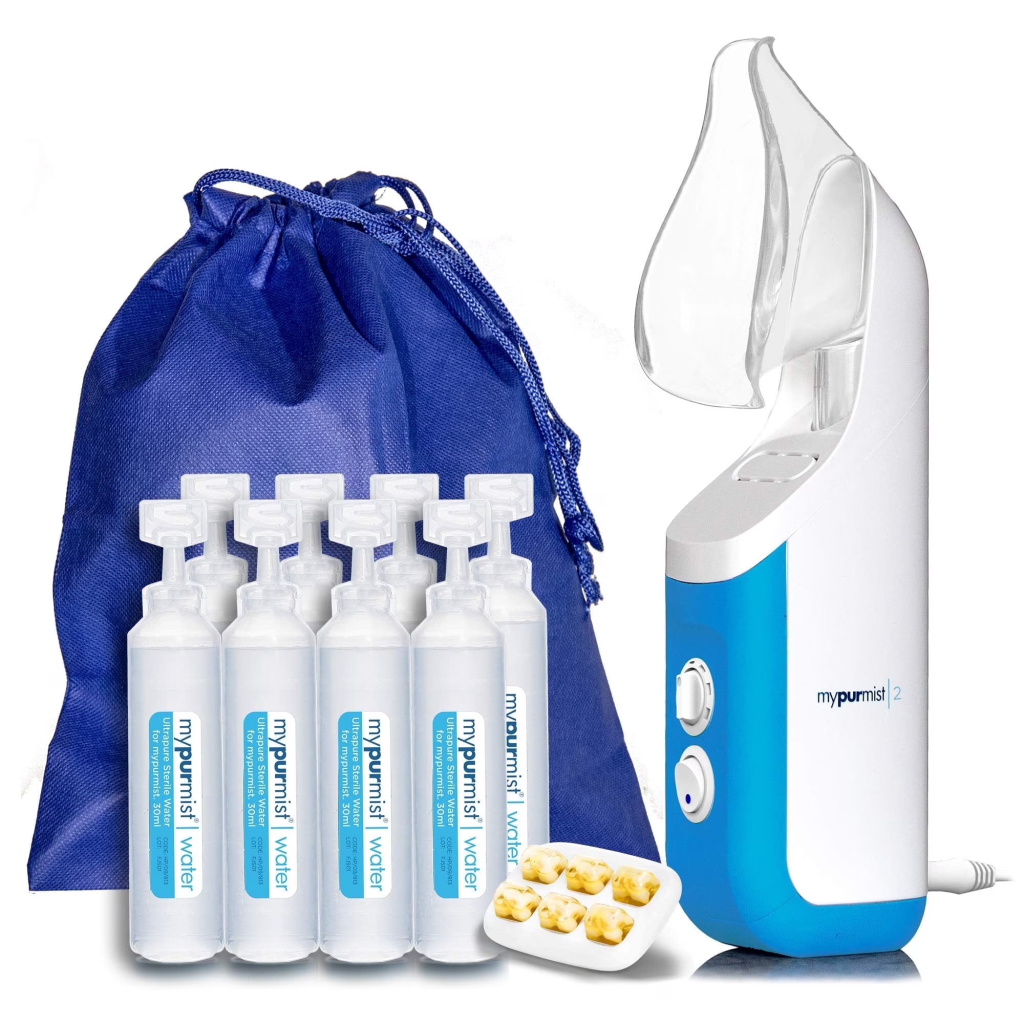
If you’re looking for true warm steam instead of nebulized mist, MyPurMist 2 is one of the most popular options for professional singers. It’s a medical-grade steam inhaler and the only one in the world with a medical-grade HEPA filter. Instead of having to boil water manually, it generates ultrapure steam on demand with consistent temperature control.
It’s also one of the more expensive devices in this category, but for some singers, the reliability and steam quality justify the investment.
Specs
- Type: Handheld warm steam inhaler
- Steam Source: Ultrapure steam (no additives required)
- Heat-Up Time: Produces steam within seconds
- Power: Plug-in (corded use)
- Included: Mask attachments for inhalation
Steam Delivery Type
Unlike VocalMist’s cool saline mist, MyPurMist 2 delivers warm steam.
The company markets its steam as ultrapure, filtered vapor. That means:
- No saline pods
- No additives
- Controlled, consistent heat
If you prefer the soothing sensation of warmth, this is a major differentiator. The steam feels more like a traditional steam bowl.
Safety & Build
MyPurMist 2 is designed with built-in temperature regulation and automatic shutoff features, which reduces the risk of overheating. The build quality feels solid as well, not like a drugstore facial sauna.
Since it produces warm vapor, it’s great that it has safety features. Compared to DIY steaming over a pot of boiling water, it’s far more controlled.
Performance for Singers
In the real world, MyPurMist 2 produces steady, consistent steam almost immediately after powering on.
It’s a little bulkier than VocalMist, but most singers appreciate the consistent output. It’s great for use pretty much anywhere, whether you’re at home, the studio, or in the dressing room backstage. And because it produces warm steam, a lot of singers in dry environments prefer it over nebulizers.
Noise level is minimal as well. It just produces a soft hum, which makes it perfect for use backstage if outlets are available.
Portability & Ease of Use
While handheld, MyPurMist 2 does require a power outlet, which is strange considering the first iteration had a cordless version. It’s a bit less travel-friendly than battery-powered options like VocalMist.
However, it’s easy to set up. All you have to do is fill the reservoir, plug it in, and steam.
Cleaning is easy as well, though regular maintenance is recommended.
Pricing
Online Reviews & Reputation
MyPurMist has a strong reputation with singers too. I’ve seen tons of positive reviews about its self-cleaning capabilities and the fact that it’s nice for “warming up” the chords.
The only common criticisms I’ve seen are about the price and the need for access to power. But overall, the sentiment is favorable.
| Pros | Cons |
| True warm ultrapure steam | Relatively expensive |
| Quick heat-up time | Requires outlet (not fully portable) |
| Consistent, controlled temperature | Larger than pocket-sized devices |
| Strong reputation with singers | Not as travel-friendly as battery-powered options |
If you want a professional-grade warm steam inhaler and don’t mind paying a premium, MyPurMist 2 is one of the most consistent and widely trusted options in the vocal world. In my book, it’s the best steam inhaler for singers on the market.
Conair Facial Sauna — Best Budget Home Option
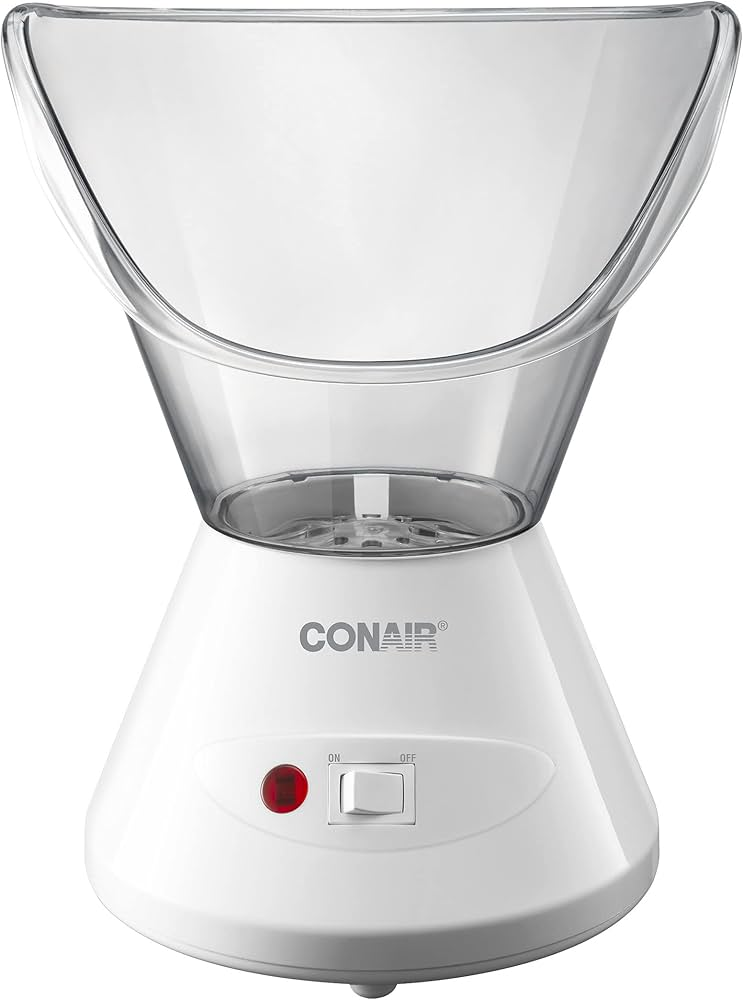
So Conair Facial Sauna was not designed specifically for singers. It’s marketed primarily as a skincare device. That said, plenty of singers use facial steamers like this at home because they’re super affordable, great for occasional maintenance, and easy to set up.
If you want warm steam without spending hundreds of dollars, this is one of the most accessible entry points.
Specs
- Type: Plug-in facial sauna
- Steam Source: Warm steam (water-based)
- Heat-Up Time: A few minutes
- Power: Corded
- Attachments: Facial mask-style cone
Steam Delivery Type
The Conair produces traditional warm steam by heating water internally. It’s closer to the classic “bowl and towel” method, just contained and a bit more controlled.
That said, it’s not engineered for precise vapor consistency the way higher-end vocal steamers are. Steam output can fluctuate slightly depending on water level and heating cycle.
For casual home use, that’s fine. For heavy professional use, you may notice the difference.
Safety & Build
Because this device heats water, safety depends on how carefully you handle it. It does include basic safety features like automatic shutoff, but the materials and construction feel more consumer-grade than medical-grade.
It’s generally safe when used as directed, but it’s not built specifically for vocal health applications.
Performance for Singers
For singers steaming at home before practice or rehearsal, it gets the job done. Plus, I love the fact that it also comes with a nasal cone for respiratory treatments. It’s one of the major reasons I chose this particular face steamer over others.
However:
- It’s bulkier
- It’s not discreet
- It’s not something you’d realistically bring backstage
It works best as a stationary home tool.
Portability & Ease of Use
This is not a travel device. The footprint is much larger than the other options I’ve mentioned and requires counter space and an outlet.
Setup involves:
- Filling the reservoir
- Waiting for it to heat up
- Leaning into the facial cone
Cleaning is easy, but necessary to prevent buildup.
If you prioritize portability, this won’t be your pick.
Pricing
Online Reviews & Reputation
Online reviews tend to be positive in the skincare world, but of course, the vocal world is what we’re looking at. I originally got the idea to look into this particular steamer from Rob Fillo, a Canadian singer-songwriter, who talked highly of it on his channel.
It’s great to have a budget option that gets praise, even if it wasn’t built specifically for the same use as the other options above.
| Pros | Cons |
| Very affordable | Not designed specifically for singers |
| True warm steam | Larger footprint |
| Easy to find in retail stores | Consumer-grade build quality |
| Good entry-level option | Not portable or backstage-friendly |
If you’re just getting started and want a simple at-home steamer to use every now and then, the Conair Facial Sauna is the best vocal humidifier for singers on a budget.
Vicks Personal Steam Inhaler — Best Affordable Steam Inhaler for Singers
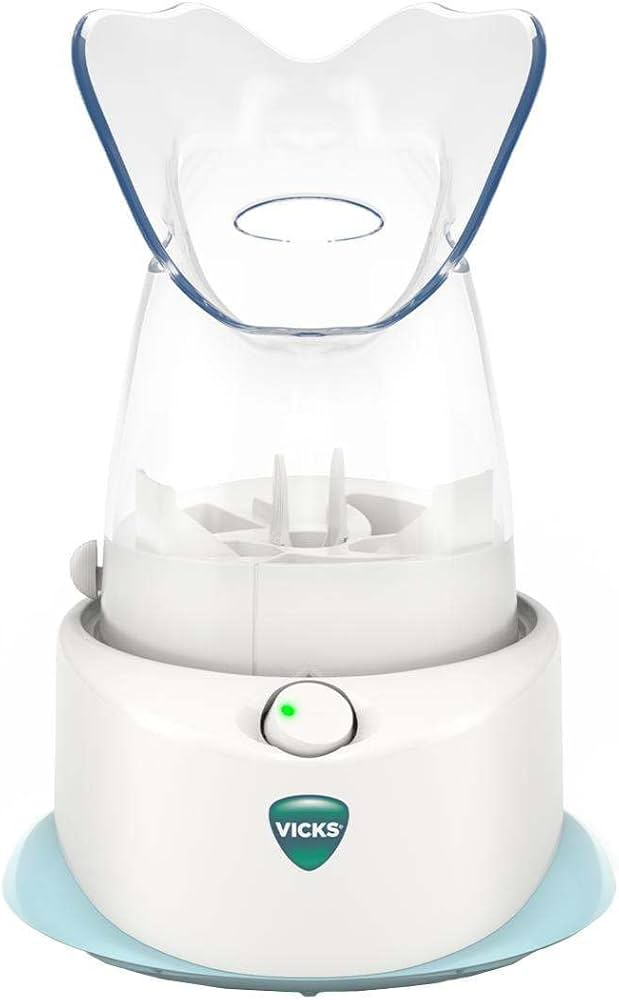
If you want something you can grab at a local pharmacy today and start using tonight, the Vicks Personal Steam Inhaler is one of the most accessible options on the market. It isn’t designed specifically for singers, but it delivers true warm steam at a price point that students and entry-level performers can appreciate.
Specs
- Type: Plug-in warm steam inhaler
- Steam Source: Heated water vapor
- Heat-Up Time: A few minutes
- Power: Corded
- Mask: Soft face mask attachment
Steam Delivery Type
The Vicks Personal Steam Inhaler produces traditional warm steam by heating water internally.
However, temperature consistency can vary slightly during longer sessions. It doesn’t have the same engineered vapor control as higher-end models like MyPurMist.
For light, occasional steaming, though, this usually isn’t an issue. For heavy daily use, you may notice fluctuations.
Safety & Build
Because it’s heated, it’s important to handle it properly. It includes basic safety mechanisms like auto shutoff, but it’s still a consumer-grade appliance.
With that said, even for a non-medical-grade piece of equipment, the build quality is solid. Materials are typical molded plastics you’d expect from a drugstore device.
Performance for Singers
If you’re dealing with dryness before rehearsal or after a long vocal session, you can get warm vapor in 5 to 15 minutes.
It’s best suited for:
- Home use
- Occasional steaming
- Budget-conscious performers
It’s a little bigger than the other portable
Noise level is minimal, though the heating cycle can create a soft bubbling sound.
Portability & Ease of Use
While technically “personal-sized,” it’s still a plug-in device. That limits portability.
Setup is easy:
- Fill with water
- Plug in
- Wait for steam
Cleaning is relatively simple but important to prevent mineral buildup.
Because it’s widely available at pharmacies and big-box stores, replacement or return is easy if needed.
Pricing
Online Reviews & Reputation
Most online reviews are generally positive for the price point. Many users point out that it works especially well when they’re dealing with a head cold or congestion.
| Pros | Cons |
| Very affordable | Consistent temperature |
| Available in just about any drugstore | Not designed specifically for singers |
| True warm steam | Requires outlet |
| Easy setup | Consumer-grade durability |
If you’re just starting out or want a low-risk entry point into steaming, the Vicks Personal Steam Inhaler is an affordable place to begin.
How Forbrain Complements Vocal Steaming
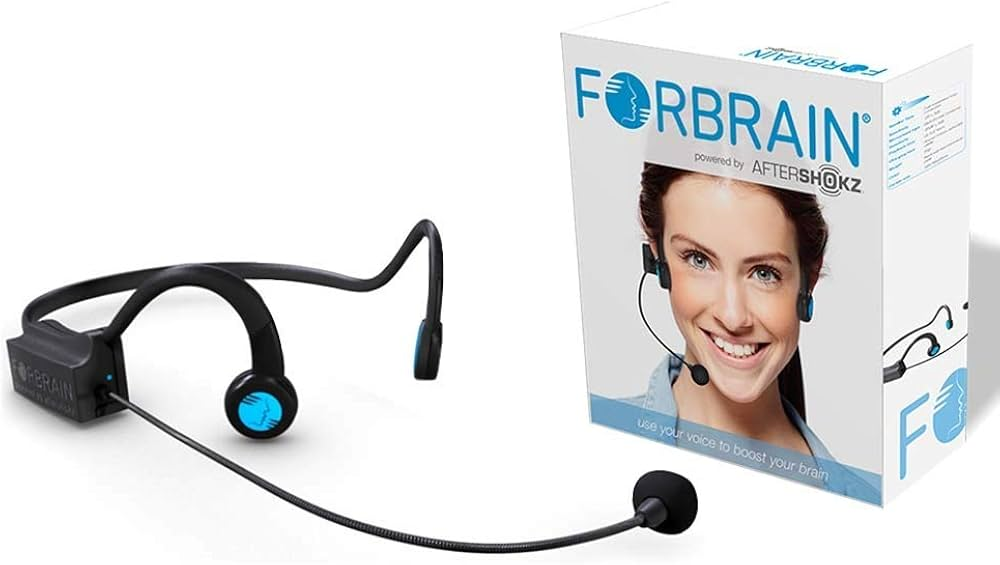
While steaming can temporarily support moisture in the upper airway, hydration alone won’t improve your technique, pitch control, or vocal awareness. That’s why it’s important to pair steamers with the right training tools to optimize your singing.
What Steaming and Nebulizing Do
When you inhale warm steam or nebulized saline, you get several benefits.
Studies have shown that bebulization decreases phonation threshold pressure (PTP), meaning less effort is needed to start up vocal fold vibration. Steaming, on the other hand, reduces and thins out mucus while hydrating the vocal cords.
For singers, that can mean:
- Temporary relief from dryness
- A soothing sensation before rehearsal
- A feeling of easier phonation
That’s helpful. Especially during long rehearsal weeks or dry travel conditions.
But it’s important to keep expectations realistic.
What Steaming and Nebulization Do NOT Do
Steaming does not:
- Train pitch accuracy
- Fix vocal tension patterns
- Improve breath control
- Build resonance awareness
- Increase vocal stamina long-term
Hydrated tissue may feel more responsive, but the neuromuscular coordination behind great singing still requires focused training.
That’s the missing piece for a lot of singers.
Where Forbrain Fits In
Forbrain uses bone-conduction auditory feedback to help you hear your voice differently while you sing.
Instead of amplifying the room around you, it feeds your own voice back through cranial vibration, providing you with an increased awareness of your voice. The better you can hear yourself, the less you have to push to get a grip on your pitch or tone.
This equates to less vocal fatigue.
Used after a steaming session, it can:
- Help you monitor pitch more precisely
- Increase sensitivity to changes in resonance
- Improve self-perception during warmups
- Reinforce cleaner technique before rehearsal or performance
Steaming prepares the tissue, while Forbrain trains awareness.
Those are two different jobs that work well together.
Ideal Routine for Singers
Here’s a practical way to combine both:
- Steam for 5–10 minutes before rehearsal or practice
- Move into a light vocal warm-up
- Use Forbrain for focused pitch or control exercises
- Transition into rehearsal or performance
With this approach, you’ll stay hydrated and vocal-aware.
If you’re interested in building more control into your routine, you can learn more about how Forbrain supports vocal awareness training.
What Is a Vocal Steamer?
The term vocal steamer gets used loosely, and that’s where a lot of confusion starts.
Not every device marketed toward singers works the same way. Some produce warm steam. Some deliver saline mist. Others are just room humidifiers.
Steam Inhaler (Warm Steam Devices)
A traditional steam inhaler heats water and produces warm vapor that you inhale directly through a mask or mouthpiece.
This is what most singers picture when they think of “steaming.” The warmth can feel soothing, and the moisture can temporarily support hydration in the upper airway.
These devices are designed for short, focused sessions, usually 5 to 15 minutes at a time.
The benefits include:
- Increased vocal fold flexibility
- Less hoarseness
- Moisturization of the vocal tract
- Mucus reduction
- No risk of lung infection (steam particles are too big to enter the lungs
Nebulizer (Saline Mist Devices)
Nebulizers don’t produce heat. Instead, they convert sterile saline solution into a fine mist that you inhale directly.
There’s no warmth, and the particles are smaller, meaning they get into the lower parts of the airway better.
The benefits include:
- Less overall vocal effort
- Increased surface hydration
Humidifier (Room-Based Devices)
Humidifiers are completely different.
They add moisture to the air in an entire room. You don’t inhale steam directly. You just exist in a more humid environment.
Room humidifiers can:
- Help counter dry climates
- Support overnight air quality
- Reduce environmental dryness
But they aren’t the same as targeted vocal steaming sessions. They work passively over long periods rather than delivering concentrated moisture.
A Quick Safety Note
This article is for educational purposes only and does not constitute medical advice. If you’re dealing with persistent hoarseness, pain, or vocal injury, consult a qualified medical professional such as an ENT (ear, nose, and throat specialist) or laryngologist.
Used responsibly, steamers can be part of a healthy vocal routine. Just keep your expectations realistic, and always prioritize proper vocal technique and medical guidance when needed.
Which Vocal Steamer Is Right for You?
There isn’t one “best” vocal steamer for every singer. The one you choose should depend on how often you sing, where you sing, and how important convenience is to you.
Here’s a practical way to narrow it down.
If you perform or travel frequently, portability is everything. You’ll want something lightweight, compact, and easy to set up.
If you only sing occasionally, you probably don’t need a premium device. A more affordable plug-in option, like the Vicks Personal Steam Inhaler or a basic home facial steamer can get the job done for light use.
Bottom Line
There you have it, the best vocal steamers for singers.
Now note that no vocal steamer is going to “fix” your voice.
Steam can temporarily support moisture in the upper airway. It can feel soothing. It can help counter dryness before rehearsal or after a long set. But it doesn’t correct bad habits or build long-term control.
That work comes from consistent technique and vocal awareness.
If you’re investing in the best vocal steamer for singers, think of it as one piece of a larger system. Hydration supports the tissue. Training supports the coordination behind the sound.
That’s why a smart routine pairs targeted steaming with structured vocal work and devices made for the actual work, like Forbrain.