


Homeschooling with an IEP: Making the Leap for Your Child
 Amanda Unrau
 M.A., CCC-SLP
08/12/26 | Last modified: 09/22/26
Many parents reach a point where they wonder whether their child would learn better outside of the traditional school system. If your child has an IEP, however, the decision can feel overwhelming and nerve-wracking. What happens to special education services? Can you still get evaluations? Will your child lose important support? Can they still succeed academically?
Families often worry about losing services and protections, but homeschooling is possible for many children with IEPs. Homeschooling allows for individualized instruction, but it also creates new responsibilities, and rules vary by state and district. This guide explains how homeschooling with an IEP works, what happens to special education services, how to transition successfully, and how to set up an effective support plan at home.
What Is an IEP?
An Individualized Education Program (IEP) is a legal and binding document that gives children who qualify for special education access to educational and functional goals. Children qualify for an IEP by meeting specific requirements following a comprehensive evaluation. An IEP ensures that children in public school have the support they need to thrive. IEPs can include special education, speech-language, occupational therapy, and physical therapy services. IEP accommodations and modifications support student access to the curriculum and may include changes to the environment, presentation, response, or timing of instruction. Team members gather data on each goal and track a child’s progress over time.
Can You Homeschool a Child With an IEP?
Yes, children with IEPs can be homeschooled. The types of special education services available to homeschoolers vary by state and district, but parents generally have the right to homeschool regardless of whether a child has an IEP. Homeschooling laws vary by location, and families should research local requirements before withdrawing from school.
Should You Homeschool a Child With an IEP?
Homeschooling with an IEP is possible, but it is a big decision. Families should consider what that change would mean and determine if it is a good fit for their child. For more on homeschooling in general, see our guide on how to homeschool your kids.
Situations Where Homeschooling May Be a Good Fit
Families have many reasons for wanting an alternative to traditional public school. Some of these reasons make homeschooling a good fit.
- School anxiety: If getting your child to school every day is a challenge because they are anxious about attending, it is worth considering homeschooling.
- Bullying: Children with IEPs may experience bullying at school, and it can be hard for administrators to stay on top of the situation.
- Sensory overload: The sensory input of loud noises and bright lights in a public school is often out of the child’s control.
- Inadequate academic progress: Children with special needs may not do well academically if their other needs are not being met or if they have difficulty accessing the curriculum.
- Need for flexible pacing: Children with an IEP need to move through the curriculum at their own pace.
Situations Where Homeschooling May Be More Challenging
Of course, there are instances in which homeschooling a child with an IEP may be difficult in a family’s current season.
- Severe parent burnout: If a parent is in a season of overwhelm, with work responsibilities, family needs, health concerns, or other reasons, it may not be the best time to add a new endeavor to an already heavy load.
- Difficulty accessing services: If your child with an IEP needs services such as physical therapy, occupational therapy, speech therapy, counseling, behavior support, or reading support, they need access to these services during homeschooling. If gaining access is challenging or impossible, you may need more time to determine how to obtain this support.
- Lack of support systems: With a homeschool IEP, you need support from family, other parents, and a homeschool community. Make sure you have these support systems in place before getting started.
- Inability to meet intensive needs independently: When you combine homeschooling and IEP needs, consider the intensity of those needs. If your child has significant needs that are currently being met in school, will you and your child be able to meet those needs without that school support?
Questions to Ask Before Making the Decision
Before jumping into homeschooling with an IEP, ask yourself these questions:
- What support does my child need most? Make a list of the support your child needs, and determine which ones are most necessary.
- What services are currently helping? Determine which services are making a difference for your child or are helping them function in their daily life.
- What services can I replace privately? If you cannot replace all services privately, you need to prioritize. Which services are readily available in your area, or accessible remotely via telepractice?
- How much time can I realistically devote to homeschooling? This includes services and extracurricular activities that you will need to schedule and transport your child to and from.
Why Some Families Choose Homeschooling After an IEP
Each family will have their own reason for choosing to homeschool after an IEP, but these are some of the most common motivations behind the switch.
Academic Frustration
A child’s academics and progress in the classroom curriculum are main reasons families choose to homeschool with an IEP.
- Slow progress despite interventions: Your child may not be meeting their IEP goals or making progress in the classroom, even with the interventions and support outlined in the IEP.
- Lack of individualized instruction: Even if your child has an IEP, they may still be receiving instruction in the same way as the rest of the classroom, which may not be the best way for them to access the curriculum.
- Curriculum pacing concerns: Your child has strengths and weaknesses in different areas, but the pace of the curriculum may not take this into consideration. Instruction may move too quickly or more slowly than needed.
Emotional Wellbeing
The emotional wellbeing of the child is another motivating factor for many families to start homeschooling.
- School anxiety: If school is challenging for a variety of reasons, the child is going to become anxious and may even dread going to school.
- Low confidence: When your child knows that things are challenging or they have difficulty learning concepts that seem to come easily to others, they can develop low confidence and lack motivation.
- Frustration related to learning challenges: If learning is consistently a struggle all day every day, your child is going to become frustrated. They can develop a negative attitude about learning and not want to try.
Sensory or Environmental Challenges
The school environment presents many challenges for children with an IEP.
- Classroom distractions: The classroom is full of distractions: the buzz of electronics, noise coming from other students or tablets, people coming in and out, the hustle and bustle of the hallway, and bells or alarms. It can be extremely challenging to focus.
- Sensory overload: The combination of overhead fluorescent lights, heat or air conditioning, uncomfortable desks, the inability to move their body, multiple noises, and various smells can lead to sensory overload.
- Difficulty focusing in large groups: Not all instruction and support can be delivered individually or in small groups, and large group sizes can make it difficult for children to focus.
Desire for More Flexibility
Some families become frustrated with the limited options available in the school setting, so they turn to homeschooling for the increased flexibility.
- Therapy scheduling: At school, a child typically has no choice in when they are seen for services. At home, you can determine the day and time that works best for your child.
- Medical needs: Your child will receive limited support for their medical needs at school, but at home they can be fully supported. You can monitor their food, medications, and how they are feeling throughout the day.
- Customized routines: In the school setting, your child has to follow the routine that is set up for them, which might be the routine that the rest of the children follow. That routine may not play to your child’s strengths or allow for frequent breaks.
- Individualized pacing: Instead of following the generic pace of the curriculum, with homeschooling, you can go through the curriculum at your child’s pace.
What Happens to an IEP if You Homeschool?
How does homeschooling impact the IEP and your child’s access to special education services? It is important to understand what happens to the IEP if you homeschool. An IEP is generally tied to public school enrollment, and withdrawing from public school may affect how the IEP is implemented. Some services may stop while others may remain available, depending on state rules. Homeschooling laws and special education policies vary significantly, so consult your state’s specific laws and guidelines.
Does the Existing IEP Stay Active?
In many states, once a child withdraws from public school, they are usually not allowed to continue receiving services from the school. In many situations, schools are not required to provide services to homeschooled students, but a school may choose to, so check with your local district. In some states, homeschoolers are classified as private school students, which means they may be entitled to some services. Verify your local procedures for the withdrawal process, since you will likely need to submit specific forms.
Can Homeschooled Students Still Receive Services?
Some districts within some states may continue to offer services to homeschooled students, but this is not common. The services offered will often not be the full services that the child received when they attended the school. In many states, you have the right to request an evaluation for your child from your local school district. You will need to look up your state’s homeschool laws and contact your local school district to find out if anything is available for your child.
If your child is not eligible to receive services through the school district, your child can receive services with a professional locally or remotely via teletherapy. This includes evaluations as well as speech therapy, occupational therapy, and counseling. Other support services are also available, such as reading tutors, vision therapy, and behavior therapy. Some therapists will even come to your home, which is a great opportunity for your child to work on their skills in their most natural environment.
Questions Parents Should Ask Before Withdrawing
Before you officially make the switch and withdraw your child from school, ask yourself some important questions:
- Which services will remain available? Find out if your child will have access to continue any services through the school, and which ones. If they will not have access to these services, how will they receive those services?
- Can my child still receive evaluations? Contact your local school district to find out if your child is eligible for a special education evaluation. This must often be done in writing.
- Will records remain accessible? Find out how to obtain your child’s records. You may need to request them in writing when you withdraw your child.
- Are there alternative service plans available? You can create a new educational plan to support your child’s learning at home. This may be called a Student Education Plan (SEP).
- What documentation should I keep? Find out what documentation is required for homeschooling in your state. Some states have specific requirements. Even if your state doesn’t require anything, consider what kind of documentation you would like for your own records and for future planning.
IEP vs 504 Plan vs ISP vs Parent-Created Homeschool Plan
There are different types of plans available for children with special education needs, depending on the type of school and the type of support needed. The main plans are an IEP, a 504 Plan, an ISP, and a Parent-Created Homeschool Plan. Below is a comparison of each type of plan and a breakdown of the purpose, eligibility, creator, location, and supports available in each.
| Plans for Special Education Students | |||||
| IEP (Individualized Education Program) | 504 Plan | ISP (Individual Services Plan) | IESP (Individualized Education Services Program) | Parent-Created Learning Plans (Student Education Plan) | |
| Purpose | Ensures specialized instruction and related services for a child with a disability to access the curriculum with supports | Ensures students with disabilities or medical conditions can access the curriculum, but does not change the content | Provides equitable special education and related services to private school students with disabilities | Provides equitable special education and related services to students with disabilities who have opted out of the public school system | Tailors education to a child’s strengths, weaknesses, learning style, and pace outside the public school curriculum |
| Eligibility | -Diagnosis: meets criteria for a disability-Impact: must adversely impact educational performance & require specialized instruction | Requires a physical or mental impairment or medical condition that significantly impacts their ability to access the curriculum | Student must meet criteria for a disability and require special education services; must be enrolled in a private school | Student must be parentally placed in a non-public school or be homeschooled in the designated jurisdiction, meet disability criteria and require specialized instruction | Any student whose parents educate them outside the traditional public school system; no diagnosis needed |
| Creator | Multidisciplinary team: Parents, Special Education Teacher, General Education Teacher, School Psychologist, Speech Language Pathologist, Occupational Therapist, etc. | Multidisciplinary team:Parents, General Education Teacher | ISP Team: Parents, Public School Representative, Private School Representative, Special Education Teacher or Providers | Committee on Special Education (CSE) in the local public school district; team includes parents, public school representatives, private school representatives | Parents, student, educational consultants |
| Where it Applies | Public school district | Public school district | Private school | Non-public schools & homeschool environment | Home education, co-ops, umbrella schools, higher education admissions |
| Available Supports | Special education services, related services (speech therapy, occupational therapy, physical therapy, counseling), accommodations, modifications, assistive technology | Environmental modifications, medical accommodations, assistive technology | Related services (speech therapy, occupational therapy), teacher training, specialized instructional materials or equipment | Specialized instruction, related services | Public school resources (state-dependent), parents can contact state homeschool associations or special education consultants |
How to Transition From Public School to Homeschool With an IEP
Once you’ve decided to homeschool your child with an IEP, there are a few steps to take when you make the switch.
Understand Your Local Homeschool Requirements
Every state and school district has its own requirements for homeschool students. It is important to do your research before you withdraw your student from school.
- Withdrawal procedures: School districts may require parents to sign a letter of intent to withdraw their child to homeschool.
- Notice requirements: Most states also require you to file a form indicating that your child will be homeschooled.
- Record keeping: Request copies of your child’s cumulative file, medical files, and evaluations for your own records.
- Acknowledge IEP termination: You will likely need to indicate that public school services and your child’s IEP end on their withdrawal date.
- Assessments: Some states require some form of evaluation, while others have no testing requirements. Make sure you know what your state requires.
- Reporting obligations: Determine the homeschool reporting requirements for your state. Some states require you to track hours or have specific subjects that must be taught.
Request Important Educational Records
You will want all of your child’s educational records as you formulate a new homeschool plan.
- IEP documents: Request copies of all current and past IEPs.
- Evaluations: Request copies of your child’s initial evaluation and any more recent evaluations.
- Progress reports: Progress reports are often included in the IEP, but if not, make sure to ask for separate copies.
- Medical files: If your child has any medical needs, ask for their medical files.
- Report cards: You will want copies of all of your child’s grades and progress throughout the years.
- Assessment results: Request copies of any district or state assessments.
Clarify Available Services
Determine what services are available for your child and how you will access them.
- District services: Some states and districts allow homeschooled children to continue receiving some services from the school. Check your local laws.
- Private therapy: With an evaluation, your child can qualify for private therapy services locally.
- Teletherapy: If local therapy is not available or the schedule is limited, teletherapy is another way for your child to access the services they need.
- Community programs: Non-profits and university clinics often offer services for children with disabilities at a reduced cost.
Create a Transition Plan
Set up a plan for your child as you transition to homeschooling, knowing that this plan will likely change once you get started and find out what works and what doesn’t.
- Academics: Look into curricula that best support your child’s needs. You will likely use several different curricula for various subjects. Most families often try a few before they find the best fit. Consider both paper and pencil options as well as online options.
- Therapies: If your child received therapies at school, that support should continue while homeschooling. Try to get those started as soon as possible to remain consistent and ease that transition.
- Routines: Set up a regular daily and weekly routine. Consider your child’s attention span, sensory needs, and how often they need breaks. This routine may need to be adjusted several times.
- Social opportunities: There are many opportunities for social interaction while homeschooling. Your child will have more time with siblings and family. Consider joining a co-op with local families. Look into teams or clubs your child may be interested in joining. Libraries often offer free activities, such as book clubs, computer classes, or game nights.
- Support services: Your child may require additional support in other areas. For example, you can look into specialized tutors or counseling services.
Allow Time for Adjustment
Switching from public school to homeschool is a big change. Some children struggle to start new things, so be patient and encouraging, and give yourself and your child time to adjust.
- Reducing pressure initially: Keep expectations realistic the first month of homeschooling. Don’t pack the schedule too full or sign up for numerous extracurricular activities. Ease into things and don’t try to force rushing through a new curriculum.
- Rebuilding confidence: Your child may come away from school with a negative attitude about learning and a lack of motivation. Help them build up their confidence. Allow them to help plan their schedule and choose extracurriculars. Leave time for them to explore new interests. As you support their learning style and pace, they will gain confidence as they experience successes.
- Creating new routines: Your child probably spent a lot of time sitting and following the rest of the class at school. You have the freedom to change that and create a new routine for your child. Implement more breaks and opportunities for movement, give them time outside in nature, let them help prepare their meals and snacks. You can set up a routine that helps your child succeed.
How to Get an IEP for Homeschool
Many parents ask how they can get an IEP for homeschool students because they don’t want their child to lose those supports and services. While a homeschooled student typically can’t have the same IEP they would have while attending the school, the child may be able to obtain evaluations or support services. Some districts may offer evaluations or some services for homeschooled students. The services that are available to homeschoolers vary widely, so parents need to look up state laws and contact their local district.
Requesting an Evaluation
The first step in getting services for your homeschooled child is to obtain an evaluation.
- Contacting the local district: Reach out to your local school district to find out if they complete evaluations with homeschooled children. You may need to submit a request in writing.
- Obtaining referrals: Contact your child’s pediatrician or other professionals your child works with to obtain referrals for an evaluation.
- Documenting concerns: Include your concerns or any diagnoses or other services your child currently has.
Private Evaluations
Whether or not your child is able to obtain an evaluation through the school district, you can contact outside professionals for a private evaluation.
- Psychologists: A psychologist evaluates children for learning or behavioral disabilities, including cognitive, academic, and social-emotional deficits.
- Neuropsychologists: A neuropsychologist assesses how the brain’s functioning affects learning and behavior. This is helpful for children with brain injuries and disorders.
- Speech-language pathologists: A speech-language pathologist can evaluate your child for speech and language deficits. Speech therapy can help your child improve their articulation, receptive language, expressive language, vocabulary, grammar, and social language skills.
- Occupational therapists: An occupational therapist can help your child with daily life tasks that are impacted by poor fine motor skills or functional vision deficits. This can include tying shoes, buttoning clothing, reading, and writing.
Alternative Service Plans and Supports
Instead of combining your child’s IEP and homeschool, consider how you can support them in other ways.
- Therapy services: Pursue evaluations in areas of concern so that your child can continue the services they need while homeschooling, such as speech therapy or occupational therapy.
- Tutoring: Consider hiring a math or reading tutor if those are areas in which your child needs extra support.
- Intervention programs: Professionals trained in specific intervention programs can provide structured instruction in different academic areas. Examples include Orton-Gillingham reading programs and TouchMath.
- Parent-created learning plans: Parents can create their own learning plans for their child that include tutoring, therapy services, online or in-person curriculum, and intervention programs.
Homeschool Strategies for Children Previously Supported by an IEP
We have compiled a list of homeschool strategies that can be implemented for children who had an IEP in the public school setting.
Instructional Strategies
Consider which instructional strategies will support your child in their learning.
- Flexible pacing: Now that your child doesn’t have to follow the pace of the rest of the class, adjust instruction to your child’s strengths and weaknesses. You may be able to move through some classes quicker than others.
- Chunking assignments: Divide assignments into simple steps to keep your child on track and make the work more manageable.
- Explicit instruction: A child with a disability may not learn implicitly. They often require explicit instruction of key concepts that are broken down.
- Repetition and review: Frequent repetition strengthens pathways in the brain and aids in memory. Review concepts more than once to identify areas that need more work and help your child connect ideas.
- Multisensory learning: Engage multiple senses during instruction to activate different parts of the brain and help store items in memory.
Organization and Executive Function Strategies
Your child may have weak executive function skills. Identify their areas of struggle and set up systems to help.
- Visual schedules: Visual schedules can build independence and reduce anxiety by helping your child know what to expect. They can be used for morning and evening routines, chores, and daily or weekly schedules.
- Checklists: With a checklist that lists out everything that a child is expected to do each day, there are no surprises, and they will know they are done with all of their required tasks when they cross off everything on the list.
- Timers: Use timers to keep a child on track, ease transitions, and give them an understanding of the passage of time. You can use timers to count down how long a child has to work, when it is time to move to the next task, or to alert them of an upcoming appointment or class. As they learn to use timers, they build independent work skills.
- Task breakdowns: Divide a complex task into simple steps. Identify the overall goal, the specific steps that need to be done to complete the task, and the order of the steps. Add visuals if needed.
Attention and Regulation Strategies
If your child has difficulty staying on task and maintaining attention, implement some of these attention and regulation strategies.
- Movement breaks: Frequent movement breaks can improve focus and help children regulate their energy. Include short breaks that are only a few minutes for jumping jacks or deep breathing, as well as longer breaks for going on a walk or playing tag.
- Sensory supports: Help your child regulate their nervous system and get back on track by offering sensory support. Adjust lighting, provide comfortable seating in a quiet environment, offer fidgets such as stress balls or putty, and have headphones and weighted blankets available.
- Flexible seating: Offer seating options apart from a rigid desk chair. Offer stability balls, wobble stools, floor cushions, bean bag chairs, or a standing desk with a walking pad.
- Predictable routines: Stick to a consistent routine. Your child will know what is expected of them and how long they are expected to remain focused and on task.
Communication and Language Support Strategies
Your child may have weak receptive and expressive language skills, so you need to support your child’s communication and language skills.
- Visual aids: Symbols and picture cards help speech-delayed or nonverbal children communicate by pointing to pictures. Visuals also aid comprehension during verbal or written instruction.
- Read-alouds: Reading books aloud helps children stay engaged and increase reading comprehension. Choose books with predictable text and include props or related activities.
- Discussion-based learning: This style of learning lets children take the lead. Instead of worksheets or lectures, students discuss subjects. This improves understanding and builds critical thinking and problem-solving skills.
- Speech-language exercises: If your child receives speech and language services, work on carrying over their skills with speech-language exercises. These could include practicing speech sounds while looking in the mirror, categorizing items, or expanding sentences. Your child’s speech-language pathologist is able to provide activities for your child’s specific needs.
Confidence-Building Strategies
Switching to homeschooling can weaken your child’s confidence, especially if they had a negative school experience. Focus on building their confidence in this new setting.
- Focusing on strengths: Instead of emphasizing areas of struggle, make sure your child knows their gifts and talents. Remind them that they are creative, a caring brother or sister, or great with numbers.
- Celebrating progress: Every step forward, no matter how small, is worth celebrating. This keeps up your child’s motivation and makes them proud of their learning.
- Realistic expectations: Don’t expect to breeze through a curriculum quickly or work for hours a day without a break. Understand that you will need to adjust your expectations and take things slow, especially as you get started.
- Self-advocacy: Teach your child to advocate for himself or herself. They should be able to request what they need to succeed, such as a movement break, extra time, or assistive technology.
The Benefits of Using Forbrain for Homeschooling Support After an IEP
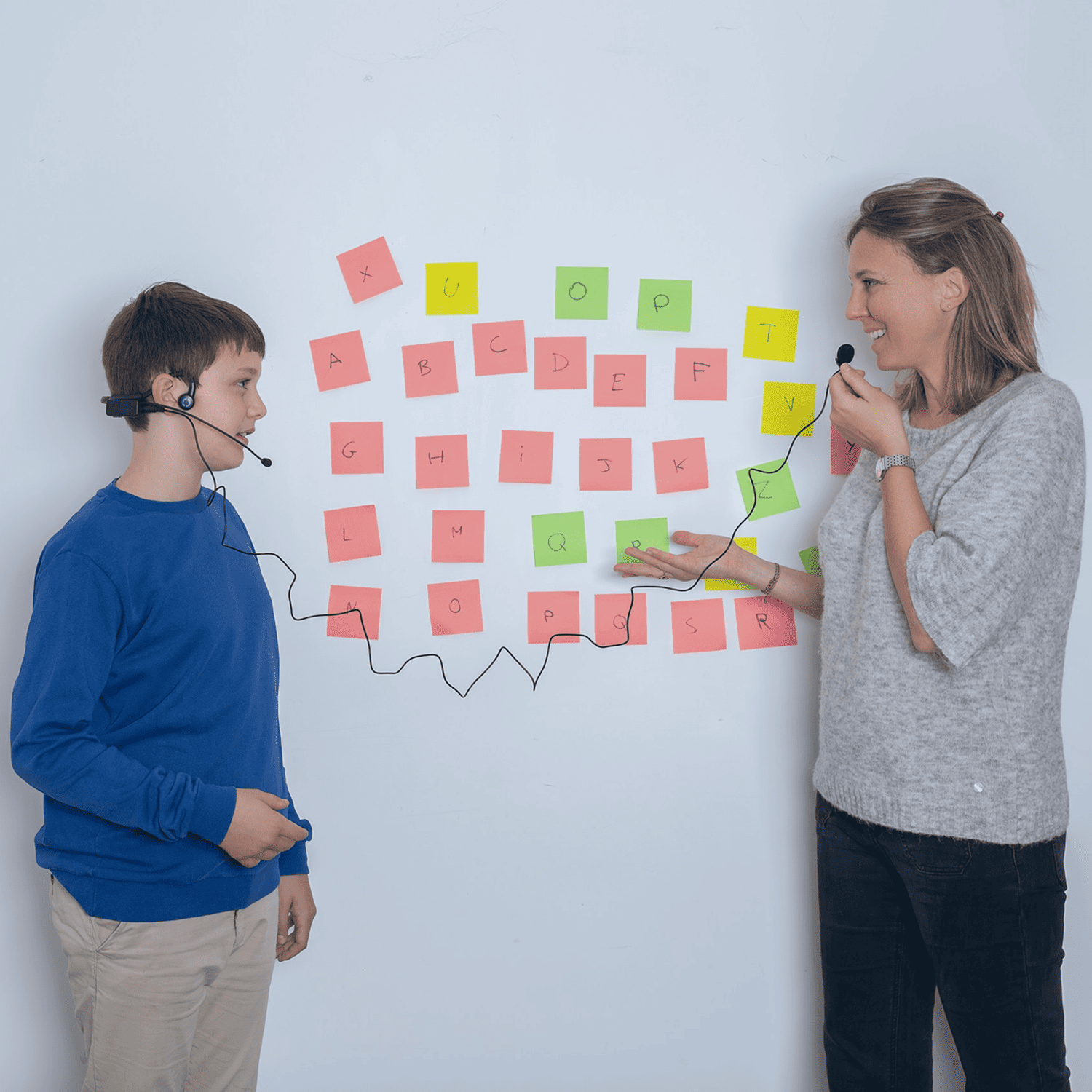
The Forbrain headset is an educational support tool you can add to your homeschooling toolkit. When worn by your child, it uses bone conduction to provide auditory feedback that may support attention, focus, and listening skills. Because the child hears their own voice more clearly, it may aid language development and communication practice, and it can help with comprehension while reading aloud. Forbrain is not a replacement for professional speech therapy, but it can support your homeschool learning routines.
Bottom Line
Children with IEPs can be homeschooled. Services and eligibility vary by location, and parents should research and understand local requirements before withdrawing their child from school. Homeschooling allows individualized learning and flexibility. Progress at home can still be tracked effectively without a formal IEP. It is important to build a strong support system and ensure that your child has access to the services and resources they need. With a solid plan in place, homeschooling with an IEP can be a great fit.
References
American Speech-Language-Hearing Association. (n.d.). Individualized education programs (IEPs), individualized family service plans (IFSPs), and Section 504 plans. Retrieved August 3, 2026, from https://www.asha.org/slp/schools/ieps/
Individuals with Disabilities Education Act, 20 U.S.C. § 1400 (2004). https://sites.ed.gov/idea/
HSLDA. (2020, August 3). What’s an SEP/IEP/ISP? Home School Legal Defense Association. https://hslda.org/post/what-is-an-sep-iep-isp
U.S. Department of Education, Office of Special Education and Rehabilitative Services. (2022). Questions and answers on serving children with disabilities placed by their parents in private schools. Retrieved August 6, 2026, from https://sites.ed.gov/idea/idea-files/questions-and-answers-on-serving-children-with-disabilities-placed-by-their-parents-in-private-schools/