


Auditory Processing Homeschool Therapy: Home Strategies and Professional Support
 Amanda Unrau
 M.A., CCC-SLP
07/30/26 | Last modified: 07/30/26
For a child with auditory processing difficulties, a traditional classroom can be a hard place to learn. Background noise, fast verbal instruction, and the constant effort of processing spoken information all add up to listening fatigue.
Homeschooling offers an alternative: a quieter, more flexible setting where a child with auditory processing disorder gets individualized instruction, repetition, and room to work at their own pace. At home, you can support your child’s listening, language, reading, and learning through everyday strategies, though home support doesn’t replace professional evaluation or therapy when concerns are significant.
This article covers how auditory processing homeschool therapy works, along with practical strategies, activities you can do at home, curriculum considerations, and ways to set your child up for success.
What Is Auditory Processing Disorder?
Auditory processing disorder impacts how the brain processes and interprets sounds. APD is a deficit in the processing of auditory information. Individuals with APD may have normal hearing but still have difficulty understanding spoken information, especially in noisy environments. Auditory processing difficulties can affect listening, language, reading, spelling, and learning.
To learn more about the symptoms, causes, and diagnosis of auditory processing disorder, read our full guide to APD. There’s also a free APD test to help you decide whether further evaluation makes sense.
How Auditory Processing Disorder Affects Learning
When a child has difficulty interpreting what they hear, it makes it challenging to learn new information. APD may affect the following areas of learning:
- Following spoken directions: Even if a child hears the instructions, they may not be able to take in all steps to execute the task correctly.
- Listening comprehension: Children with APD struggle to understand spoken language with background noise or during rapid speech.
- Phonological awareness: Phonological awareness is the understanding of the sounds in language and being able to manipulate these sounds. This is an area of weakness in those with APD.
- Reading and spelling: With the difficulty discriminating between similar-sounding speech sounds, reading and spelling skills may suffer.
- Language: Children with APD may have weak language skills, such as weak vocabulary development and poor receptive language.
- Memory for verbal information: Poor listening skills and difficulty focusing on auditory information make it challenging to recall verbal information.
- Classroom participation: When you can’t process verbal information, you are less likely to contribute to discussions or conversations, or even answer direct questions.
- Music, rhythm, and rhymes: Children with auditory processing disorder have difficulty learning songs and nursery rhymes. They also tend to have poor musical and singing skills.
- Attention and mental fatigue: Listening is extremely difficult for children with APD. Attempting to take in auditory information all day can be very fatiguing for them. At times it may seem like they aren’t paying attention, but they may just be unable to focus on listening any longer and may be easily distracted.
- Confidence and frustration levels: Much of the instruction at school is delivered orally, which puts children with APD at a disadvantage. Over time, this leads to frustration and a lack of confidence at school.
Can Homeschooling Help a Child With Auditory Processing Disorder?
Homeschooling may provide the educational solution that many families who have children with auditory processing disorder are looking for. Homeschooling may help reduce background noise and overstimulation. Parents can adapt the teaching pace and routines to suit their child’s needs. More repetition and visual supports can also be incorporated into homeschool lessons. Individualized learning may reduce a child’s frustration and anxiety. Some children may still need outside therapy or educational support alongside homeschooling, like they would in a traditional school setting.
What Is Auditory Processing Homeschool Therapy?
Auditory processing homeschool therapy supports a child’s auditory processing deficits in the homeschool setting. It may include the following:
- Professional therapy completed at home or online, usually with a speech therapist or audiologist
- Home listening and language practice
- Auditory training activities
- Phonological awareness support
- Auditory memory support
- Multisensory learning
- Accommodations during homeschool lessons
- Speech-language or reading support integrated into daily routines
Home support should not replace licensed professionals when a child has significant difficulties.
Signs Your Child May Need Auditory Processing Support
Parents may notice concerns during homeschool lessons, conversations, reading time, or daily routines. Pay attention if you notice any of the following signs in your child.
Listening and Attention Signs
Auditory processing disorder affects a child’s attention and listening skills the most. These are some signs of weak listening and attention skills you may notice.
- Appears to be listening but not hearing
- Difficulty localizing sound
- Asking for repetition often
- Seeming distracted during verbal instruction
- Difficulty understanding rapid speech
- Trouble remembering spoken directions
- Difficulty hearing in noisy environments
- Delayed responses to questions
- Difficulty differentiating between speech and other sounds
- Mix up similar-sounding words
Reading and Academic Signs
Auditory processing disorder impacts reading skills and affects the ability to learn. Watch for these signs of delayed reading and academic skills.
- Difficulty sounding out words
- Weak phonological awareness
- Spelling challenges
- Trouble remembering information from oral lessons
- Poor reading comprehension
- Difficulty learning through lectures alone
- Difficulty taking notes during class
Communication and Social Signs
Children with auditory processing disorder may exhibit the following signs of poor oral communication and delayed social skills.
- Misunderstanding jokes or sarcasm
- Difficulty following conversations
- Difficulty expressing themselves clearly
- Missing details during discussions
- Frustration during verbal tasks
- Difficulty participating in group activities
- Difficulty focusing and understanding when multiple people are talking at once
How to Get Help for Auditory Processing Disorder
If you notice several of these signs in your child, it may be time to seek help to determine if your child has an auditory processing disorder.
Start With a Hearing Evaluation
Although APD is different from a hearing impairment, the first step is a hearing evaluation. Start with a hearing evaluation to first rule out hearing loss.
Seek an Auditory Processing Evaluation
Audiologists typically evaluate and diagnose APD. A comprehensive evaluation may assess listening, memory, and sound processing skills. Interdisciplinary team members such as speech-language pathologists and educational psychologists may also conduct assessments of language, phonemic awareness, social communication, memory, executive function, and attention.
Work With Professionals
The most well-rounded treatment approach includes multiple professionals. All team members collaborate to complete the evaluation, come up with a plan, track progress, and provide home recommendations.
Audiologists may set up assistive listening technology and environmental modifications. They also provide direct auditory training. Speech-language pathologists can provide therapy to improve language skills and auditory discrimination, strengthen auditory memory, and teach compensatory strategies. Reading specialists work on phonics skills to improve decoding and comprehension. Educational psychologists can suggest school accommodations as well as learning and coping strategies.
Auditory Processing Activities at Home
Along with professional therapy and support, there are many things that parents can do at home to help their child with auditory processing disorder.
Listening Comprehension Activities
Implement several of these activities to help your child improve their listening comprehension.
- Listening for key details
- Sequencing activities (“first, next, last”)
- Story retelling
- Answering “wh” questions after reading aloud
- Breaking down and repeating each step of directions before starting a task
- Summarizing short audio clips
- Discriminating between similar sounds or words
- Identifying the location of sounds
- Recognizing auditory information in background noise
- Catching changed words in a familiar story or rhyme read aloud
Auditory Memory Activities
With practice, the following activities can boost your child’s auditory memory.
- Repeating word or number sequences
- Memory games
- Following multi-step directions
- Clapping rhythm patterns
- Repeating sentences with increasing length
- Auditory recall games (e.g., telephone)
- Musical chairs
- Simon Says
- I Spy
- Directed drawing from spoken step-by-step directions
Phonological Awareness Activities
Children with auditory processing disorder need to improve their phonological awareness skills. Get started with some of these activities.
- Rhyming games
- Syllable clapping
- Identifying beginning and ending sounds
- Isolating sounds in words
- Blending sounds
- Adding or removing sounds in words
- Sound substitution games
- Segmenting sounds in words
- Learning nursery rhymes
Multisensory Learning Activities
Children with APD learn best when multisensory strategies are used. Try implementing these approaches at home.
- Tracing letters while saying sounds (use sand, shaving cream, Play-Doh)
- Using letter tiles
- Movement-based learning (e.g., four corners for multiple choice questions, walking while listening to audiobooks)
- Drawing while listening
- Hands-on vocabulary practice (e.g., pictionary, charades)
- Pairing visuals with spoken instructions
- Metronome clapping while repeating spelling words
- Using puppets or objects to represent key words and sounds while reading a story aloud
Everyday Auditory Processing Practice
To improve their auditory processing skills, children with APD need to practice listening to and making sense of auditory information. As with any challenging skill, repeated practice leads to improvement over time.
- Following cooking directions: Start with a simple recipe where your child must follow verbal directions to make a sandwich or no-bake dessert.
- Listening games during chores: Read out a short grocery list or set of steps and have your child repeat the items back.
- Audiobook practice: Listen to a single sentence, pause the book, and repeat the sentence word for word.
- Retelling daily events: At the end of the day, discuss the events of the day in sequential order.
- Listening walks: Close your eyes for a moment outside and identify where specific sounds originate.
- Repeating key information: Have your child say important details back to you to lock them in.
- Previewing the main idea: State the topic or category before the details so your child knows what to listen for.
- Layered listening: Listen to an audiobook or podcast with soft background music playing and practice summarizing the spoken words.
Homeschool Strategies for Children With APD
Parents will need to keep in mind their child’s specific needs when homeschooling a child with auditory processing disorder. Specific auditory processing homeschool strategies help make homeschooling a successful and positive experience for the child and their parents.
Instructional Strategies
When homeschooling your child with APD, consider the way you teach, the rate at which you give instructions, and the pace in which you move through the day. Implement several of these strategies into your instructional routine.
- Giving one direction at a time: Break complex, multi-step instructions into single steps so your child can process each one before the next.
- Speaking clearly and slowly: Rapid speech is more difficult for children with APD to process.
- Repeating important information: This helps your child know to focus on this information.
- Checking for understanding: Have the child repeat key information back to you.
- Previewing new vocabulary: Teach new vocabulary before it is used in a text.
- Allowing processing time: Offer time for the child to process incoming auditory information before they respond.
Environmental Strategies
Consider where and when your child is learning. You may need to make some changes to the environment to set them up for success.
- Reducing background noise: Consider adding rugs or curtains or turning off electronics.
- Using quiet learning spaces: You may need to set up your child in a separate room so they can focus.
- Limiting competing audio: Avoid playing music or podcasts or using a blender or loud appliance during learning sessions.
- Using headphones when appropriate: When you can’t cut out all background noise, offer headphones to reduce it.
- Maintaining predictable routines: Consistent routines reduce cognitive fatigue so that the child with APD can focus their energy on processing sound instead of guessing what might happen next.
Multisensory Teaching Strategies
Children with APD benefit from multisensory instruction. By activating multiple senses, the brain builds stronger connections.
- Combining visuals and spoken instructions: Pair spoken instruction with pictures, written text, gestures, or physical objects.
- Using movement during learning: Offer opportunities to pair learning with movement, such as bouncing a ball while spelling or marching while reciting a poem.
- Incorporating tactile activities: Let children touch and feel items to build stronger connections. Use real objects when teaching new vocabulary or practice writing in salt.
- Using graphic organizers: Graphic organizers help students organize what they hear, such as organizing the information in a story read aloud.
- Color coding information: Assign each part of speech a specific color (e.g., verbs: green, nouns: red, adjectives: blue, adverbs: yellow) and highlight each word in a paragraph the correct color.
Organization and Executive Function Strategies
Help your child stay organized and lessen the load on their executive functioning by using the following strategies.
- Visual schedules: Use schedules with written words or pictures for weekly routines or daily tasks.
- Written checklists: Written chore lists or to-do lists put the information on paper, giving the child less to remember.
- Breaking tasks into smaller steps: Big projects are overwhelming, but seeing each task separately makes it doable. For a child baking a cake, show them the steps in order: get out ingredients, get out supplies (measuring cups, bowls, pans), measure ingredients, mix ingredients, pour batter into pan, set the oven timer.
- Timers and transition warnings: Use timers to keep your child on track. Set timers to show them how much time is left in a particular subject or when it is time to get started.
- Structured lesson routines: Having a regular routine in your lessons helps your child know what to expect. For example, start each lesson with a short warm-up, followed by direct instruction, a hands-on activity, and a review.
Emotional Support Strategies
Besides academic instruction, it is important to support your child’s emotional development. Here are some ways you can offer emotional support while homeschooling.
- Praising effort: Acknowledging how hard they are working boosts their confidence and motivates them to keep trying.
- Avoiding overload: Don’t max out their schedule or their capacity for information. Keep some time free of auditory input to give their system a break.
- Teaching self-advocacy: Teach your child to identify triggers, ask for repetitions, and move out of noisy environments.
- Scheduling breaks: Incorporate frequent breaks into the daily routine for your child to unwind, play outside, or engage in hobbies.
- Reducing frustration during listening tasks: Minimize background noise, incorporate visuals, and speak slowly.
Choosing the Right APD Homeschool Curriculum
When choosing an APD homeschool curriculum, look for the following factors:
- Flexible pacing: Avoid a program that requires the child to follow a rigorous pace to keep up with the curriculum. Your child needs flexibility and the ability to move at their own pace.
- Visual supports: Programs that include visuals for lessons, vocabulary, and hands-on activities are good options.
- Repetition and review: A child with APD needs multiple exposures to the same content in order to fully understand it.
- Clear written instructions: Your child needs specific, detailed instructions that are broken down into individual steps.
- Multisensory learning opportunities: The curriculum should include teaching and learning opportunities that utilize multiple senses.
- Phonological awareness support: Children with APD benefit from a curriculum that includes auditory discrimination, phoneme segmenting and blending, and decodable texts.
- Short lesson formats: Avoid curriculum options with long, complicated lessons that your child won’t be able to follow. Short lessons will keep their attention.
- Reduced lecture-heavy instruction: Look for programs that teach through reading, visuals, and hands-on work rather than long spoken lectures.
- Assistive technology compatibility: A good APD curriculum will be compatible with assistive technology, such as text-to-speech software, digital recorders, noise-canceling headphones, and timers.
Sample Homeschool Routine for a Child With APD
Once you take all of the above information into consideration, you can create a homeschool routine for your child with APD. Here is an example of a possible APD homeschool routine.
- Morning visual schedule review: Go over the visual schedule for the day each morning so your child knows what is to come. Show them any significant changes, such as appointments, outings, or playdates.
- Phonological awareness practice: Daily phonological awareness practice helps build sound discrimination and working memory. Short, spoken, multisensory exercises are fun and simple to incorporate.
- Short academic lesson blocks: Keeping lessons short helps your child stay focused and engaged.
- Movement or sensory breaks: Include frequent breaks throughout the day for movement and outside play.
- Listening comprehension activity: Practice improving listening skills by reading aloud or listening to audiobooks and summarizing the story. Make it a fun and consistent part of the day by reading during snack time or while doing a hands-on activity such as a puzzle.
- Hands-on learning projects: Incorporate regular hands-on learning, such as making a new recipe, planting a garden, going on a scavenger hunt, or planning a trip.
- Quiet independent work: Give your child plenty of time to work without competing noise in a separate area or with headphones. This gives their brain a break from constant auditory input.
- Review and recap at the end of the day: Have your child tell you what happened at the end of each day. They can use the visual schedule to help them keep events in sequential order.
Your routine should be flexible and stay adaptable. It will likely change often throughout the year.
When to Seek Professional Help
Even with the support you provide at home, your child may need additional help. Parents, consider professional support if you notice the following:
- Listening difficulties significantly affect learning
- Reading or language skills are delayed
- The child becomes frustrated or anxious
- Directions are consistently misunderstood
- Symptoms persist despite home support
- Speech, language, or academic concerns continue to grow
- The child avoids social interactions
Keep in mind that this article is educational and informational, and not diagnostic.
The Benefits of Using Forbrain for Auditory Processing Homeschool Therapy
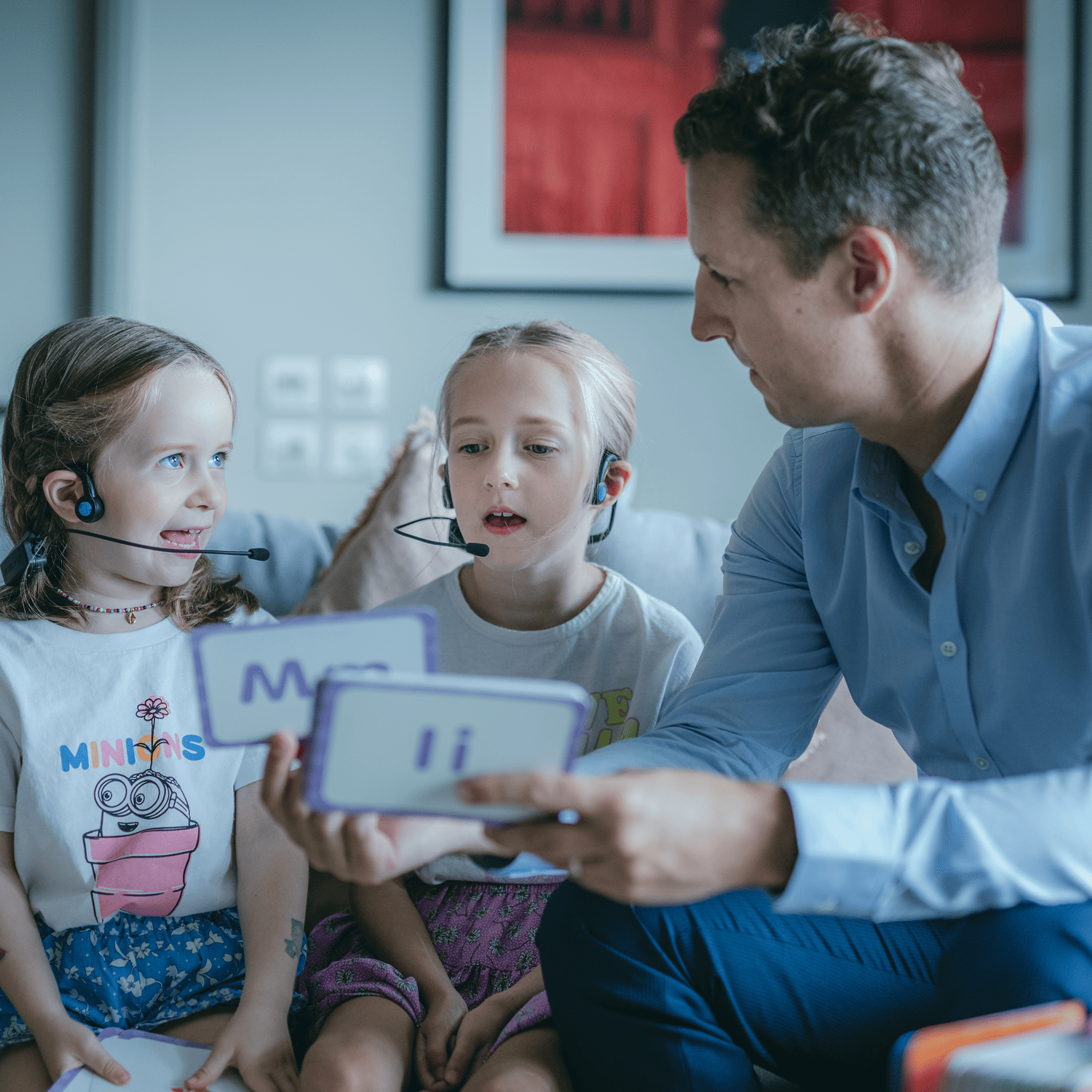
Forbrain is an auditory stimulation tool that can complement auditory processing homeschool therapy. The headset is worn by the child and works on their voice to provide immediate auditory feedback. When a child hears their own voice more clearly, it may support listening attention and auditory memory. Forbrain can be worn during speech and language practice and while reading aloud, and it may help your child stay focused during homeschool lessons.
Forbrain can be used alongside professional therapy and home support. It is not a replacement for an audiologist or speech-language pathologist.
Bottom Line
Homeschooling can provide the flexibility and individualized support that children with APD need. Auditory processing homeschool therapy often combines professional guidance with home strategies. Auditory processing activities at home can support listening, language, reading, learning, and memory. There is no single approach that works for every child with APD, and each strategy must be individualized. Regular, consistent, and patient support matters most.
References
American Speech-Language-Hearing Association. (n.d.). Central auditory processing disorder. Retrieved July 23, 2026, from https://www.asha.org/practice-portal/clinical-topics/central-auditory-processing-disorder/
Miller, C. (2025, August 7). Signs a child might have auditory processing disorder. Child Mind Institute. https://childmind.org/article/signs-a-child-might-have-auditory-processing-disorder/
Reading Rockets. (n.d.). Auditory processing disorder in children. Retrieved July 23, 2026, from https://www.readingrockets.org/topics/speech-language-and-hearing/articles/auditory-processing-disorder-children