


Homeschooling a Child with Autism: How Do I Do It?
 Amanda Unrau
 M.A., CCC-SLP
07/23/26 | Last modified: 07/23/26
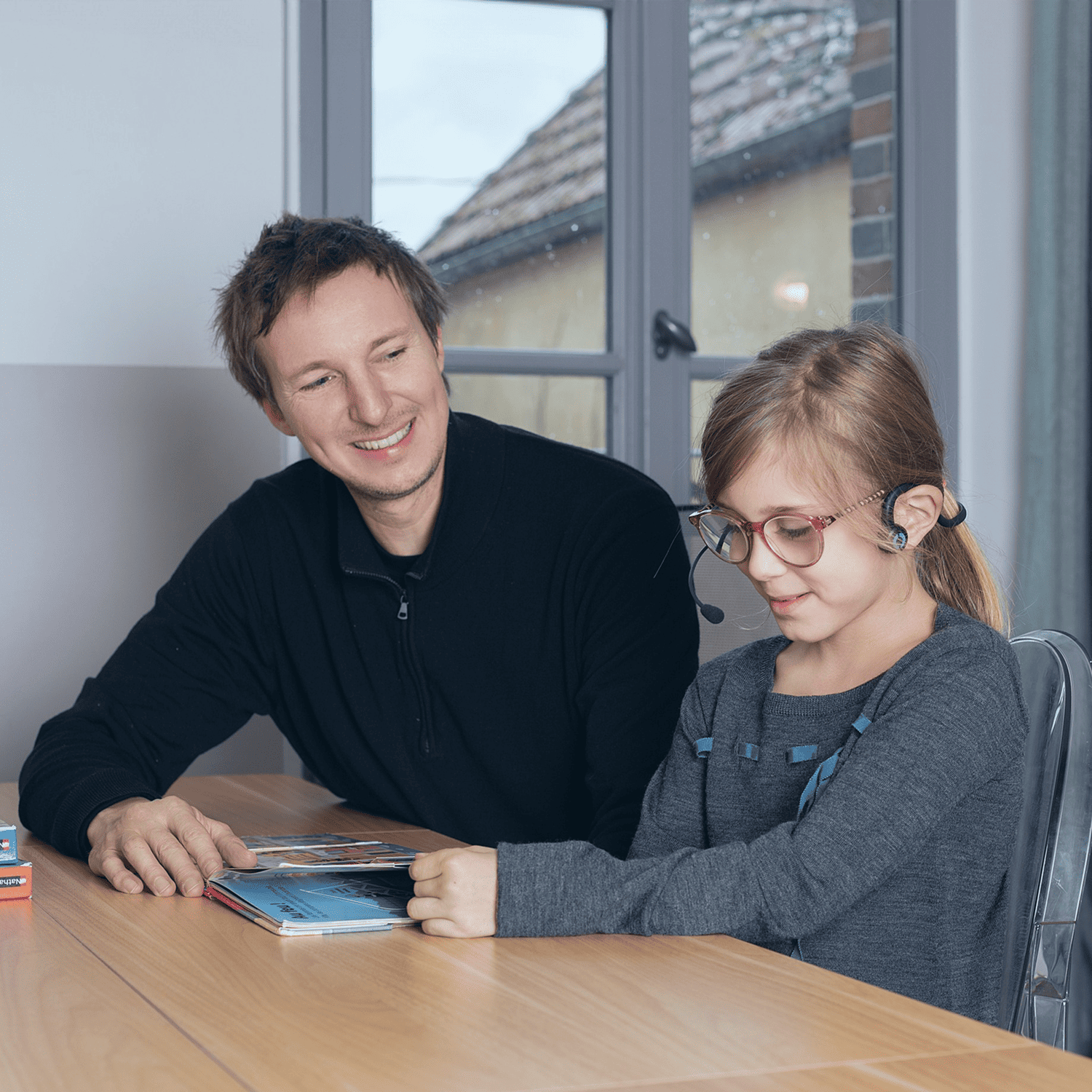
Many autistic children struggle to be successful in traditional classroom settings due to a variety of factors, including communication difficulties, sensory overload, rigid routines, anxiety, or individualized learning needs. Homeschooling is a great alternative because it provides a more flexible and supportive learning environment. Every autistic child has unique strengths and challenges, and since there is no one-size-fits-all homeschooling approach, the approach can be customized for each child. This article will explore the benefits, challenges, and practical strategies for homeschooling an autistic child.
Can You Homeschool a Child with Autism?
If you’ve ever asked yourself, “Can I homeschool my autistic child?” the answer is yes. Autistic children can absolutely be homeschooled, though the rules vary by state. Homeschooling is an option that works well for some families but not all. As the parent, you have the freedom to adapt teaching methods to your child’s needs and learning style, and understanding how autism affects learning will help you shape those decisions.
Benefits of Homeschooling a Child with Autism
Many families choose to homeschool their autistic child as an alternative schooling option because of the many benefits for their child. There are many academic, social, emotional, and behavioral advantages to homeschooling with autism.
Flexible and Individualized Learning
With homeschooling, the method and pace of learning can be adjusted at any time. Children can spend more time grasping challenging concepts and move on from concepts they understand easily. They may be able to get through all they need to learn in a day in just a couple of hours. Instruction can play to their strengths, and you can incorporate more of the child’s interests. Because of the one-on-one ratio, the autistic child receives more undivided attention from their parent or caregiver.
Reduced Sensory Demands
Traditional school environments often have harsh fluorescent lighting, crowded hallways, and noisy cafeterias. All of these can be distressing and distracting to children with autism. In the homeschool environment, lighting, noises, and other factors can be adjusted to reduce distractions and improve focus.
Predictable but Flexible Schedules and Routines
Children with autism benefit from having a predictable routine, and the constant changes that occur in a school setting can cause them stress and anxiety. With homeschooling, the autistic child can take the lead in creating a schedule that works for them, while having time to prepare for any potential changes.
Emotional Safety and Confidence
At home, children with autism can relax and learn in a safe environment. They don’t have to worry about being bullied or misunderstood. A lot of the additional pressures are removed, such as challenging social dynamics, excessive sensory stimulation, and a rigorous curriculum. This helps to reduce anxiety and frees up mental space for learning.
Stronger Parent Involvement
When their child attends a traditional school setting, many parents of autistic children can feel disconnected from their child’s education. They may even find themselves in conflict with their child’s school or teachers at times. Parents who choose to homeschool their child get to spend more time with their child, fully understand their needs, and take the lead in their child’s education. This includes determining what academic goals and life skills are important to their child and family.
Real-World Learning
Some children with autism struggle to connect what they are learning in a textbook to real-life circumstances. Traditional school settings do not offer many learning opportunities in a real-world environment. It can be easier for autistic children to understand the purpose behind what they are learning because real-world connections can happen naturally. Teaching and learning can be incorporated into daily activities such as problem solving, cooking, social scenarios, budgeting, and planning outings.
How to Start Homeschooling a Child with Autism
Once parents decide to homeschool their child with autism, the biggest hurdle is getting started. There are a number of decisions to make, so it helps to have a plan to start moving forward. We have gathered information about how to homeschool a child with autism.
Understand Local Homeschool Requirements
Homeschool regulations vary by location, so it is important to research the rules in your area before you start homeschooling. Some states are very strict while others are more relaxed. You may need to file forms with the state, track hours, submit documents, complete assessments and required courses, or meet other requirements. It can be helpful to reach out to other homeschooling parents in your area who have already worked through the local laws. Families in the United States can check their state rules on the Home School Legal Defense Association (HSLDA).
Identify Your Child’s Learning Needs
Since your child will now be learning at home, you need to identify their learning needs. How does your child learn best? What are their interests? What do they need to be able to do? Children with autism have unique learning styles, and incorporating things such as hands-on activities, music, and visuals can strengthen their ability to learn. Teach concepts using your child’s interests, whether that be airplanes, oceans, or horses.
Choose a Homeschooling Style
Families have many homeschooling styles to choose from. Explore the various educational approaches before purchasing a curriculum. This list contains several of the most popular options.
- Traditional structured homeschooling: This method utilizes textbooks and workbooks and looks the most similar to a brick-and-mortar setting.
- Online learning: Online schooling options offer live classes taught by teachers or asynchronous lectures that can be viewed at any time.
- Child-led learning: Child-led learning like Montessori promotes hands-on learning through natural daily activities.
- Unit studies: With this approach, subjects are integrated into different themes throughout the school year.
- Unschooling: This approach is based entirely on the child’s interests and does not follow a formal curriculum.
- Hybrid approaches: Hybrid approaches offer even more freedom and flexibility. Families may choose to combine several of these approaches. For example, structured reading lessons may be used, along with unit studies on areas of interest and online classes.
Create Realistic Goals and Expectations
Children with autism thrive with consistent routines and expectations. Come up with a daily and weekly routine that sets your child up for success. You may need to schedule frequent breaks or free time. Don’t overload the child’s schedule with too many programs and activities. Set small goals with the expectation that they will need to be modified frequently. If a curriculum or resource isn’t a good fit for your child, it’s okay to switch to something else.
Create a Supportive Environment
You need to create an autism homeschooling environment that sets your child up for success. This involves taking inventory of what works and what doesn’t. Spend some time observing your child: When or in what setting does your child focus best? What sensory input upsets them? How do they attempt to communicate before they break down? This information helps you set up their homeschooling environment as the foundation that will support their learning.
Build a Support System
Homeschooling can feel lonely, but it doesn’t have to be. Families who choose homeschool for their autistic child need a support system. Support services and groups can add to homeschooling success. Therapists such as speech therapists or occupational therapists can integrate the services they provide into homeschool routines. Local or online homeschool and autism groups provide a wealth of information as you learn from others walking the same path as you. Educational specialists and tutors can guide your child through specific subjects, apply helpful learning strategies, and help lessen the load on parents by delegating certain areas.
Homeschool Strategies for Autistic Children
Once families have done the research and taken the first steps to get started, it is time to set up homeschool strategies and systems so that the experience is successful for everyone.
Structure and Routine Strategies
Children with autism need to know what to expect during their homeschool day. Set up a routine that fits your child’s personality and can give them more independence as they get older. Below are several examples:
- Visual schedules: Schedules with pictures or images show children what is coming next and reduce their anxiety.
- Checklists: Children can help create their own checklists of what they need to accomplish each day. This can be in written form or in pictures. Crossing off tasks that are done keeps them motivated.
- Transition warnings: Sudden changes are stressful to children with autism. Prepare them for upcoming changes by giving written or verbal warnings, such as letting them know that they only have to work for 5 more minutes before taking a break or setting a timer so they can see when they need to get working. You can even use the same signal, song, or phrase to signal a transition between activities.
- Predictable routines: This includes school routines and home routines. Try to keep breakfast, chores, free time, downtime, and bedtime at the same general time every day.
- Social stories: Short narratives outlining a situation or expected behavior prepare children for new experiences or social interactions ahead of time. These can be helpful for community outings, field trips, or playdates.
Sensory-Friendly Learning Strategies
Sensory needs for autistic children need to be taken into consideration when setting up your homeschool environment. Consider implementing one of these strategies:
- Quiet learning spaces: Find a quiet space for your child to do their schoolwork. This may be a main living area when others are not around, and a bedroom or office when the space becomes crowded.
- Flexible seating: Don’t require your child to sit at a desk or chair if that isn’t working. Provide a large exercise ball so they can bounce, a rolling or spinning chair, or even allow them to stand if that is most comfortable.
- Sensory breaks: Building in sensory breaks throughout the child’s day can help to reduce overwhelm and meltdowns from escalating emotions or frustration. You may want to set up a designated area away from their working space for your child to calm down. This space should be viewed as a retreat, not as a punishment or consequence.
- Movement opportunities: Most children have difficulty sitting for long periods of time to focus on work. Autistic children especially need breaks from being in one spot so that they can move. It can be helpful to provide a menu of written or visual movement choices, such as jumping jacks, playing tag or hide and seek, or going for a walk.
- Noise reduction tools: Use rugs and curtains to cut down on background noise. Some children may find that they focus better with white noise. Offer noise-canceling headphones or headphones with soft music.
- Reduce visual clutter: Keep decor near the workspace to a minimum and have designated storage for school supplies so that the desk area is clear. Switch out harsh lighting for soft and warm tones.
Multisensory Learning Strategies
Every child learns in a unique way, and children with autism often learn through a variety of multisensory methods. You may need to try a few and will likely have to incorporate several of these learning strategies.
- Visual supports: All children benefit from visual supports, and autistic children often have strengths in processing visual information. This can look like visual schedules, choice boards, graphic organizers, communication boards, and emotional/sensory tools.
- Hands-on activities: A hands-on approach can make concepts seem more realistic. Incorporate science experiments, manipulatives for math, practicing writing in sand or shaving cream, and puppet role-playing for literature or social skills.
- Auditory learning: Some autistic children have strengths in memory and verbal recall. Audiobooks are an effective way to present information to individuals with weak reading skills. Consider adding music in the background during work time, or putting lessons, instructions, or facts to music to aid in memorization. .
- Movement-based learning: Incorporating kinesthetic learning strategies helps autistic children focus and regulate emotions. It also makes learning more engaging and motivating. Examples include acting out stories, walking while listening to an audiobook, or jumping on a trampoline while reciting key information
Communication and Emotional Support Strategies
It is just as important to offer communication and emotional support as it is to teach academic information. Without this support, children with autism will struggle to learn.
- Emotional check-ins: Many autistic children have difficulty interpreting, processing, and expressing emotions. They often need to be explicitly taught what various emotions might look like in others as well as how to give words to how they are feeling and appropriate ways to display their emotions. To avoid being overwhelmed by their emotions, check in with your child throughout the day, especially if you notice they are struggling. Consider using visuals to allow your child to select how they feel when they struggle to identify it independently.
- Self-advocacy: Children with autism often have difficulty advocating for themselves. Practice scripts with your child, such as asking for help or asking to take a break. They may also need to work on setting boundaries, such as limiting draining social interactions, requesting personal space, or avoiding environments with loud noises or bright lights. Community outings offer natural ways to practice self-advocacy skills with others.
- Allowing processing time: Children with autism may need extra time to take in and grasp information. This may look like a delayed ability to follow directions or needing time to answer questions. Give them that extra time and don’t rush them. Allow for pauses in conversation and wait several seconds before repeating instructions.
- Communication supports: Children with autism often require support for receptive and expressive language skills. These supports promote independence and reduce frustration during communication attempts. Autistic children who are nonverbal or minimally verbal benefit from using AAC (Augmentative and Alternative Communication) devices, which can be low-tech (e.g., symbols, picture cards, communication books) or high-tech (e.g., tablet apps or speech-generating devices). Visuals such as choice boards and social stories are beneficial for all children. Any child with a language delay should also receive speech therapy services with a licensed speech-language pathologist.
Executive Function and Organization Strategies
Children with autism often have deficits in executive functioning. Executive function skills allow individuals to plan and execute tasks, control impulses, focus attention, set goals, and initiate and complete tasks. Families can offer support to their autistic child in a variety of ways.
- Break tasks into smaller steps: Teach your child chunking strategies to divide tasks and organize them better. This keeps children from being overwhelmed by viewing a large task or project as a whole. For example, instead of “clean your room,” break up the task into the following steps: “1. Pick up 5 pieces of dirty laundry. 2. Put dirty laundry in the hamper. 3. Make your bed.”
- Use timers and alarms: A clock or timer can build awareness of the passage of time and the time needed to complete a specific task. Timers can be used to break down tasks into smaller components. An alarm on a calendar can remind children of upcoming events and due dates.
- Organization systems: Organization needs to be concrete. Use color-coding to organize materials for each subject and label folders and drawers with words or pictures so the child knows where items belong.
- Plan routines: Sticking to consistent routines removes a lot of stress and confusion from your child’s day. Visual schedules, written checklists, or first-then boards keep tasks visible throughout the day. Include the time on the schedule so the child begins to gain an understanding of time management.
Challenges of Homeschooling with Autism
As with any form of schooling that you choose for your child, homeschooling with autism has its challenges. It is important to fully think through all the difficulties and possible solutions before you make the switch.
- Parent burnout: When you become the sole person in charge of your child’s education, that can be a heavy weight to carry. Parents are in charge of the curriculum, schedule, managing behavior, planning activities, and any state paperwork. Even with support, everything that autism homeschooling entails can take a toll.
- Balancing work and homeschooling: For parents who have to work, juggling the demands of work and homeschool for an autistic child can be extremely difficult. Remote jobs where parents can work from home make it more feasible, but not all work schedules are flexible. Thankfully, a homeschooling schedule is, especially if families think outside the box. Some families choose to homeschool in the evenings, weekends, or year-round in order to make it work.
- Maintaining routines: Children with autism thrive when they know what to expect. While a homeschool routine is important, life happens. Since school will be happening at home, there can be frequent interruptions from other family members, home projects, appointments, and errands. Autistic children will need to adapt to all of these changes in routine.
- Socialization concerns: Many people are concerned that homeschooling limits opportunities for socialization, and social skills tend to be a specific challenge for autistic children. Parents need to be intentional about providing opportunities for their child to practice social skills with adults and peers.
- Adapting curriculum: Not many homeschool curricula are specifically suited for children with autism. Parents will need to modify any curriculum they choose in order to fit their child’s strengths and needs.
- Financial pressures: Homeschooling an autistic child comes with added expenses, such as purchasing curriculum, paying for various therapies (such as speech therapy, occupational therapy, and physical therapy), and signing up for sports, clubs, or other activities. Some states have funds that homeschooling families can use if they meet certain requirements.
Sample Homeschool Routine for an Autistic Child
Each family will need to come up with a realistic and manageable schedule that fits their life. We have provided a sample homeschool routine to help you get started. Remember to keep your daily and weekly routine flexible and adaptable.
- Morning routine: A morning routine can include getting dressed and ready for the day, making breakfast, checking the calendar for the day, and morning chores.
- Movement or sensory breaks: Add in frequent breaks throughout the day to allow for movement such as going for a walk, jumping on a trampoline, swinging or spinning on a swing, or riding a bike.
- Academic learning blocks: Add in blocks for reading, math, science, history, and any other subjects you choose throughout the day.
- Therapy time: Certain days of the week will include scheduled speech therapy, occupational therapy, or physical therapy sessions, either remotely or in person.
- Life skills activities: Homeschooling provides a perfect opportunity to teach life skills such as budgeting, meal planning and grocery shopping, maintaining a home, and job skills. These can be targeted in many daily life activities.
- Quiet time or independent activities: The schedule should include short blocks of time for the child to work on homework or other tasks independently. Give specific instructions or a detailed checklist so your child knows exactly what they need to do.
- Opportunities for socialization: This could include daily or weekly activities such as sports, clubs, classes, and homeschool co-ops or groups.
Socialization and Autism Homeschooling
It takes intentionality and planning, but there is a wide variety of socialization opportunities available through homeschooling. We have compiled a list of options that may be available in your area.
- Homeschool groups: Also known as co-ops (cooperatives), homeschool groups are groups of homeschooling families who support each other and work together to teach their children. There are many different types of homeschool groups, and you can search for what kind of co-ops are local to you. Some of these groups offer field trips and traditional school events such as dances.
- Sports or extracurricular activities: Children can join clubs or teams for any sports or activities they enjoy. Working together as a team with other children is a great skill for children with autism to learn.
- Specialty classes: A variety of classes are available for all kinds of interests, such as foreign languages, coding, robotics, Legos, baking, archery, horseback riding, gardening, debate, acting, etc. The options are endless, and these classes are a great way for children to meet other children with similar interests.
- Therapy groups: Speech therapists and occupational therapists often offer group options for therapy sessions that are focused on learning and practicing age-appropriate social skills.
- Volunteering: Autistic children can learn many life skills and social skills through volunteering. Workplaces and organizations are often more willing to take on homeschooled volunteers because they tend to be more responsible and have parent support. Search for volunteer opportunities at libraries, animal shelters, nature centers, or as a mother’s helper for family friends.
- Library or community activities: Many local libraries offer homeschooling meet-ups, story times, puzzle or game nights, and book clubs for all ages.
Choosing the Right Homeschool Curriculum for Autism
Keep in mind the following factors when deciding which homeschool curriculum is right for your child:
- Flexibility: Which homeschool curriculum offers the most flexibility in the schedule, content, pace, and delivery method?
- Sensory needs: Consider the child’s sensory needs and how the curriculum fits into that. Is the teaching method all direct instruction or reading from a book, or are there opportunities for hands-on learning and movement?
- Communication style: What are your child’s communication strengths and weaknesses? If your child is nonverbal or struggles with reading and writing, you may want to avoid a curriculum that requires a significant amount of independent reading and writing reports to demonstrate understanding.
- Learning preferences: Keep in mind the way that your child learns best. For example, if a child learns through listening, are there opportunities for read-alouds or does the curriculum come with an audio CD or music?
- Visual supports: Does the curriculum include many pictures or visuals that you can use throughout your homeschool day to reinforce the concepts?
- Pacing: You will likely need to adjust the pace of your homeschool curriculum throughout the year. Your child may breeze through certain subjects and require extra time for others. Does the curriculum allow for a different pace in each subject?
It is okay to switch curricula in the middle of the school year if you find out that one is not a good fit for your child.
Practical Tips for Parents Homeschooling an Autistic Child
Once you choose a curriculum, keep in mind these tips to make homeschooling for autism a positive experience for you and your autistic child.
- Focus on progress, not perfection: Some days may be extremely challenging, but this is a new experience for both you and your child. Every day of learning is a step forward for your child.
- Allow flexibility: Be prepared to make changes often and be willing to forgo your plans in the best interest of your child.
- Celebrate small wins: It may take your child a while to master a concept, but every act of communication and each positive social encounter is something to celebrate.
- Schedule breaks: Avoid frustration and overwhelm by being proactive. Schedule frequent breaks before your child reaches that point.
- Avoid comparison: Don’t compare your homeschooling to others and don’t compare your child to other children with or without autism. Your child is unique, and the setup that works best for your family is the right one.
- Prioritize emotional regulation: Help your child regulate their emotions by allowing for breaks, predictable routines, extra time, and opportunities to express their emotions in healthy ways.
- Adjust expectations when needed: It is important to set goals for your child’s school year or day, but keep in mind that these goals will likely need to be changed. Keep expectations realistic and attainable with the proper support.
When Homeschooling May Not Be the Best Fit
Of course, homeschooling may not be the right choice for all children with autism. Give serious thought and consideration to how homeschooling may affect your family. If you are experiencing any of the following, homeschooling may not be the best fit for your family right now.
- Severe parent burnout: If parents have demanding and inflexible careers, stressful schedules, or multiple children with significant needs, adding homeschooling to that mix can lead to parent burnout. When that happens, it affects the child, and there is little chance that homeschooling will be successful.
- Lack of support: If there are no local homeschool groups, you don’t know other people who have homeschooled, or other family members are not on board with homeschooling, be cautious of taking this on. Homeschooling is a big commitment, and you don’t want to do it alone.
- Difficulty meeting educational needs: A child may have educational needs that are too severe for parents to meet on their own. If they have significant needs, they may need ongoing support from other professionals, making another educational setting more appropriate.
- Significant stress within the family: Some seasons of life make it nearly impossible to start something new. This type of stress could include taking care of sick or elderly family members, moving, selling or starting a business, or adding a baby or other new member to the family. When a family is in survival mode, it takes all they can to maintain the status quo without throwing homeschooling into the mix.
Keep in mind that educational choices may change over time, and whatever you decide to do now is not the education method that you have to choose forever. You can make a change at any time.
The Benefits of Using Forbrain for Autism Learning Support
Forbrain is an auditory stimulation tool that may support homeschooling with autism. This headset is designed to support auditory processing and attention by providing immediate auditory feedback to the wearer. It may support listening skills and language development since the child can hear their own speech more clearly. An autistic child can wear Forbrain during any homeschool activities, such as reading aloud, practicing spelling words, or describing how to complete a recipe or science experiment. Forbrain is not a replacement for professional therapy, but it can be used alongside speech therapy and home practice.
Bottom Line
Every autistic child is unique and has their own set of gifts and challenges. For some families, homeschooling a child with autism can provide flexibility and individualized support. There is no single “right” homeschooling method that works for all autistic children. Families need to decide which homeschooling method is best for them and set up a routine that works for their family. With practice and consistent support, autism and homeschooling can be a positive and successful experience.
References
American Speech-Language-Hearing Association. (n.d.). Executive function deficits. Retrieved July 19, 2026, from https://www.asha.org/practice-portal/clinical-topics/executive-function-deficits/
Brignell, A., Chenausky, K. V., Song, H., Zhu, J., Suo, C., & Morgan, A. T. (2018). Communication interventions for autism spectrum disorder in minimally verbal children. Cochrane Database of Systematic Reviews, 2018(11), Article CD012324. https://doi.org/10.1002/14651858.CD012324.pub2
Cook, K. B., Bennett, K. E., Lane, J. D., & Mataras, T. K. (2013). Beyond the brick walls: Homeschooling students with special needs. Physical Disabilities: Education and Related Services, 32(2), 90-103. https://doi.org/10.14434/pders.v32i2.12997
Demetriou, E. A., Lampit, A., Quintana, D. S., Naismith, S. L., Song, Y. J. C., Pye, J. E., Hickie, I., & Guastella, A. J. (2018). Autism spectrum disorders: A meta-analysis of executive function. Molecular Psychiatry, 23(5), 1198-1204. https://doi.org/10.1038/mp.2017.75
Logan, K., Iacono, T., & Trembath, D. (2017). A systematic review of research into aided AAC to increase social-communication functions in children with autism spectrum disorder. Augmentative and Alternative Communication, 33(1), 51-64. https://doi.org/10.1080/07434618.2016.1267795